


The Articles in the Category cover a vast range of history not only in our country but in the world as well. The category is entitled “How We Sold Our Soul”. In many cases our history has hinged on compromises being made by the powers at be. They say hind-sight is 20/20, which is why I am discussing these land mark decisions in this manner. The people that made these decisions in many cases thought they were doing the right thing. However in some instances they were made for expediency and little thought was given to the moral ramifications and the fallout that would result from them. I hope you enjoy these articles. The initial plan is to discuss 10 compromises, but as time progresses I am sure that number will increase.
I came upon this incredible article by accident when I was researching the mental health care system in the United States. It is so complete that I could add little to it, so I just copied and pasted it to my blog to save it from languishing in a college website. Hopefully it will get more coverage now in its newly adopted home. I have a feeling I feeling this is not the last we will be hearing about the controversial chemical, so I will add any new items to this article.


Editor’s Note
Early in the 20th century, dentists discovered that fluoride reduced the number of cavities in their patients’ teeth. Soon, amidst much debate and rancor, fluoride was regularly added to American public drinking water supplies. Fluoridation has been hailed by some as a triumph of public health but it was also, as historian Frank Zelko points out this month, a profitable way to put to use a waste byproduct from the production of fertilizer.
While Florida calls itself the Sunshine State, from a geological and economic perspective, it could just as accurately be known as the Phosphate State.
The so-called Bone Valley of central Florida contains some of the largest phosphate deposits in the world, which supply global agriculture with one of its most important commodities: synthetic fertilizer. In the process, the mining industry leaves behind a scarred landscape denuded of vegetation and pocked with vividly colored waste disposal ponds that one writer described as “beautiful pools of pollution.”


Phosphate loaded by elevator at Port Tampa, FL in 1958.
Highly toxic hydrogen fluoride and silicon tetrafluoride gases are by-products of fertilizer production. Prior to the 1970s, these pollutants were vented into the atmosphere and gave central Florida some of the most noxious air pollution in the country.
During the 1960s, however, complaints by farmers and ranchers eventually forced reluctant manufacturers to invest in pollution abatement scrubbers that converted toxic vapors into fluorosilicic acid (FSA), a dangerous but more containable liquid waste.


The U.S. National Institute for Occupational Safety and Health (OSHA) cautions that FSA, an inorganic fluoride compound, has dire health consequences for any worker that comes into contact with it. Breathing its fumes causes severe lung damage or death and an accidental splash on bare skin will lead to burning and excruciating pain. Fortunately, it can be contained in high-density cross-linked polyethylene storage tanks.
It is in such tanks that fluorosilicic acid has for the past half century been transported from Florida fertilizer factories to water reservoirs throughout the United States. Once there, it is drip fed into drinking water. This is a practice that the American Dental Association and numerous scientists and public health officials describe as “the precise adjustment of the existing naturally occurring fluoride levels in drinking water to an optimal fluoride level … for the prevention of dental decay.”


A worker watching the loading of powder fine phosphate in Mulberry, FL in 1947 (left). An 1892 map of phosphate deposits on the western edge of Florida (right).
The practice of adding fluoride compounds (mostly FSA and occasionally sodium fluoride) to drinking water is known as community water fluoridation. It has been a mainstay of American public health policy since 1950 and continues to enjoy the support of government health agencies, dentists, and numerous others in the medical and scientific community.
As with many chemical additives in the modern world, however, few people know much about it.
Many are surprised to learn that unlike the pharmaceutical grade fluoride in their toothpaste, the fluoride in their water is an untreated industrial waste product, one that contains trace elements of arsenic and lead. Without the phosphate industry’s effluent, water fluoridation would be prohibitively expensive. And without fluoridation, the phosphate industry would be stuck with an expensive waste disposal problem.


Only a handful of countries fluoridate their water—such as Australia, Ireland, Singapore, and Brazil, in addition to the United States. Western European nations have largely rejected the practice. Nonetheless, dental decay in Western Europe has declined at the same rate as in the United States over the past half century. In fact, the more one looks at the history of fluoridation, the more it appears to be a relic of the sort of mid-20th century scientific incaution that gave us DDT, thalidomide, and other attempts at “better living through chemistry.”
This is not to vilify the early fluoridationists, who had legitimate reason to believe that they had found an easy and affordable way to counter a significant public health problem. However, the arguments and data used to justify fluoridation in the mid-20th century—as well as the fierce commitment to the practice—remain largely unchanged, failing to take into account a shifting environmental context that may well have rendered it unnecessary or worse.


An advertisement for the pesticide DDT from Time magazine in 1947 (left). An advertisement from the 1940s for children’s wallpaper laced with DDT (right).
Ugly Smiles and Tough Teeth
Fluoride’s public health history is like a crime story with a twist. After following a trail of clues for many years, detectives finally catch their chief suspect and put him on trial. But it soon turns out that he has redeeming qualities that far outweigh the crime for which he was originally charged.
The indefatigable private eye in this case was a young Massachusetts-born dentist, Frederick McKay. After completing his training at the University of Pennsylvania School of Dentistry, McKay moved to Colorado Springs in 1901 to establish his first practice.


He soon became perplexed by the unsightly tea-colored stains that discolored many of his patients’ teeth, a condition that he was unable to find in the dental literature. McKay began calling it “brown stain” and “Colorado stain,” and nobody understood why many residents of that particular region suffered from it while those in neighboring counties did not. In the summer of 1909, McKay and some colleagues inspected the mouths of 2,945 Colorado Springs children and discovered that 87.5% suffered from the condition.
Upon further investigation, McKay determined that the Colorado Springs area was not unique. There were pockets of brown stain throughout the country. McKay began to conduct an informal epidemiological study. He examined the local diet, soil conditions, and air quality, but eventually decided that the culprit had to be the water.
“The evidence is so conclusive,” he wrote in 1927 to the Public Health Service (PHS) in Washington, D.C., “that it is futile to discuss it further from any other standpoint.” Despite testing numerous samples, however, he could not find anything unusual in the local water supply, which was clear, odorless, and agreeable to the taste. Nevertheless, he became increasingly convinced that some as yet undetected trace element in the water was responsible for the dental lesions.
A big step toward solving the mystery of brown stain occurred in 1931, when nervous chemists at the Aluminum Company of America (ALCOA) began to examine the water in Bauxite, Arkansas. The principle ore of aluminum, bauxite was vital to ALCOA’s production process. In 1909, the town’s growing population necessitated a new water supply, and ALCOA dug three deep wells to access the ample groundwater. In a few years, children in Bauxite began to be afflicted with brown stain. Initially, this was of no great concern to ALCOA. By the late 1920s, however, the company was fending off charges that its aluminum cookware was slowly poisoning the population.


The logo for the Aluminum Company of America (left). A mural of bauxite miners from the 1940s in Benton, AR (right).
ALCOA’s chief chemist, H. V. Churchill, was concerned that any link between aluminum and brown stain would be a public relations disaster. So in 1930, he tested Bauxite’s water supply using the most advanced spectrographic equipment available at the time. The tests showed that the groundwater had unusually high levels of the element fluorine—15 parts per million (ppm), a result, he wrote McKay, “so unexpected in water that a new sample was taken with extreme precautions,” but showed the same outcome.
Soon after Churchill’s tests revealed the presence of fluoride compounds in water, animal experimentation by scientists at the University of Arizona firmly established a causal relationship between fluoride ingestion and stained teeth.
While McKay and Churchill were busy revealing fluoride’s undesirable effect on human teeth, a young Danish scientist, Kaj Roholm, was investigating the impact of industrial fluoride on human health.


A dentist examining children’s teeth at the Pine Ridge Indian Reservation in the 1940s or 1950s (left). Severe fluorosis, brown discoloration and mottled enamel, in an individual from an area of New Mexico with naturally occurring fluoride in the water (right).
In 1930, a dense layer of polluted fog settled over the Meuse Valley, a heavily industrial area in eastern Belgium, killing sixty people and sickening thousands. After lengthy and careful investigation, Roholm determined that gaseous fluoride compounds were responsible. Roholm also identified aluminum smelters as emitters of large quantities of fluoride gases.
In the mid-1930s, whether natural or anthropogenic, fluoride compounds were nothing but bad news for human and environmental health.
Just as fluoride’s negative image was beginning to crystalize in the minds of scientists and public health officials, however, a countervailing set of ideas began forming. Ironically, it also stemmed from the work of Frederick McKay.


Dr. Trendley H. Dean in the 1950s (left). An 1885 advertisement for cocaine for dental pain in children (right).
As far as McKay could tell, the staining did not actually compromise the strength or physical health of teeth. On the contrary, people living in endemic brown-stain regions seemed to have fewer cavities than the general population.
The man who played the most important role in transforming fluoride’s medical image from tooth disfigurer to a potential prophylactic against dental caries—cavities that require either filling or removing teeth—was Trendley H. Dean. A St. Louis dentist who had joined the Army Dental Corps in World War I, Dean went on to become a key figure in public health dentistry. In 1930, he was appointed chief scientist of the newly established Dental Research Section of the Nation Institutes of Health, and then in 1948 became the first director of the National Institute of Dental Research.


A dentist and patient in the 1910s or 1920s.
Dean was quick to realize that solving the mystery of mottled enamel, though useful, was of secondary importance compared to the broader public health implications of dental caries. In a letter to the U.S. Surgeon General in 1932, Dean repeated McKay’s earlier observation that “individuals in an endemic [brown-stain] area show a lesser incidence of caries than individuals in some nearby non-endemic areas. Consequently, the study of mottled enamel may disclose some lead applicable to the vastly more important problem, dental caries.”
Once it became clear that fluoride was the cause of brown stain—which Dean would soon label dental fluorosis—Dean shifted the focus of his research, and that of the government’s health bureaucracy, from eliminating fluorosis to combatting caries.
Optimizing Nature
Dental caries was perceived as one of America’s most widespread health problems in the early twentieth century. Since dentists were comparatively few and dental surveys virtually nonexistent, it is difficult to know just how pervasive the condition was and to what extent, if at all, it had gotten worse over time.


Nonetheless, dentists themselves were convinced that it had reached epidemic proportions, a perception that appears to have been borne out by military fitness records. These show that in 1916, for example, one third of potential recruits failed their health exam due to caries-related problems. As a result, funds began to flow toward dental research, both from government sources and from corporate foundations.
Many dentists and medical scientists were convinced that Americans’ diets, particularly their fondness for refined flour and sugar, were largely to blame. But changing people’s dietary habits, then as now, seemed to be an insurmountable obstacle.
No wonder, then, that Dean and others were excited by the discovery of fluoride’s impact on teeth.
During the 1930s, Dean, McKay, and colleagues from the PHS and various university dental schools set about trying to demonstrate fluoride’s connection to both dental fluorosis and reduced rates of caries. Although nobody understood exactly how it worked—and nobody would for a long time—fluoride did indeed seem to change the structure of teeth in a way that offered some protection against the assaults of the 20th century American diet.
Embarking on a succession of epidemiological studies in towns that had fluoride-rich water supplies, Dean was able to gradually zero in on a ratio that appeared to offer considerable protection against caries while causing limited and barely discernable fluorosis. The magic number, he determined, was 1 part per million (1ppm).


A 2009 map depicting areas with groundwater fluoride concentrations above the recommended levels.
As the studies continued, Dean and his colleagues published a series of articles that would become the scientific bedrock of fluoridation. So although water naturally containing 1ppm fluoride existed in very few places, it nonetheless came to be seen as the optimal level, and water containing less was deemed “fluoride deficient.”
Dean himself did not advocate artificially augmenting the level of fluoride in drinking water, at least not during the 1930s and 1940s. A cautious and methodical researcher, he felt that many years of further investigation would be required before such a prospect could be contemplated. Even the American Dental Association, subsequently fluoridation’s most steadfast advocate, was reluctant to endorse the idea. However, some dental researchers were less circumspect.


In the early 1940s, Dean began to explore the possibility of testing artificial fluoridation in a handful of carefully chosen communities. After consulting with colleagues at the University of Michigan, Dean selected the towns of Grand Rapids and Muskegon to participate in a 15-year fluoridation trial. Both cities drew their water, which had virtually no natural fluoride, from Lake Michigan. In January 1945, with the enthusiastic cooperation of city officials, Grand Rapids began adding sodium fluoride—a waste product of aluminum production—to its water supply while Muskegon remained fluoride free.
But not everyone was prepared to wait fifteen years.


In the mid-1940s, a small group of activist dentists in Wisconsin began agitating for immediate water fluoridation. Chief among them was John Frisch, a Madison dentist and prominent member of the Wisconsin State Dental Society. Frisch had been following McKay and Dean’s work closely throughout the 1930s.
In his mind, Dean’s publications had firmly established that water containing around 1ppm fluoride was both efficacious and completely safe in the fight against dental caries. Artificial fluoride, he was convinced, was no different from natural fluoride, and endless trials and experiments would merely condemn another generation of children to the pain and misery of caries. So sure was Frisch of fluoride’s safety and efficacy, that he began to add it to his home water supply so that he could monitor any changes in his children’s’ dental health.
While the Grand Rapids trial was in its infancy, Frisch and his colleagues began to promote fluoridation throughout Wisconsin. In 1947, after two years of fierce campaigning and politicking, they finally convinced city officials to fluoridate Madison’s water supply.
To allay skeptical members of the public, for whom fluoride was primarily an ingredient in rat poison, Frisch began to increasingly invoke fluoride’s “naturalness.” “The dental profession,” he declared in 1946, “is imitating nature as closely as it can.” One only had to look to Green Bay, “where people have been drinking fluorine water with sodium fluoride supplied to it by nature for over one hundred years, and no deleterious effect of any nature has occurred in that locality.”


The logo for the American Dental Association.
While the Michigan trials continued, with dozens of dental researchers descending on the state to prod and probe children’s teeth for signs of caries, Frisch and his acolytes barnstormed Wisconsin, lobbying community after community to add small amounts of sodium fluoride to its water supply.
Without any long-term toxicological studies—and apparently without any qualms—water authorities complied. Frisch’s self-proclaimed goal was to have 50 communities fluoridated by 1950, a target he duly reached.
While these numbers were quite remarkable given the rising grassroots opposition to fluoridation, Frisch would not be satisfied until every citizen in America, or for that matter, the world, could enjoy the benefits of fluoride compounds in their drinking water. Thus he grew alarmed when technical problems with the fluoride injection equipment, along with concerns about adequate sodium fluoride supplies, threatened to slow the pace of adoption.


Those concerns prompted him to write to ALCOA, which produced large quantities of sodium fluoride waste as part of its production process. “The demand for this material,” he informed them, “will soon reach astronomical proportions.” If Frisch had any qualms about the “naturalness” of ALCOA’s sodium fluoride, he managed to suppress them. But it seems unlikely that he did.
By 1950, the trial in Grand Rapids was yielding very positive results. In fact, officials in Muskegon grew increasingly agitated. From their perspective, the town’s ongoing status as the control city meant their citizens’ dental health was being sacrificed on the altar of Dean’s scientific cautiousness. They would indeed begin fluoridation in 1951, thus severely compromising Dean’s 15-year study in the eyes of fluoridation skeptics.
Meanwhile, the Wisconsin fluoridationists’ most important victory occurred at the federal level.
Frisch and his colleague, Frank Bull, the State Dental Director of Wisconsin, began to lobby the PHS to endorse water fluoridation. With anti-fluoridationist influence growing—they had already defeated several fluoridation drives in Wisconsin—Frisch and Bull were concerned that by the time Dean’s Grand Rapids trial was completed, fluoridation might be politically dead.


The PHS caved in to the pressure remarkably quickly, endorsing fluoridation in June 1950 and strongly supporting the practice thereafter. The move had a cascading effect. Within months, the American Dental Association, the American Water Works Association, the American Medical Association, and a host of other high-profile government bureaus and professional bodies all gave fluoridation their stamp of approval.
For Frisch, the PHS endorsement represented a monumental victory for dental public health. For others, it also represented new economic opportunities.
In 1951, for example, the trade journal Chemical Week enthusiastically proclaimed the coming “Water Boom for Fluorides.” “The market potential,” the author gushed, “has fluoride chemical makers goggle-eyed.” In sum, “it all adds up to a nice piece of business on all sides, and many firms are cheering the USPHS and similar groups on as they plump for the increasing adoption of fluoridation.”
Fluoridation skeptics seized upon such articles as evidence of the impure motives of fluoridation advocates. ALCOA’s involvement in discovering fluoride in water—and supplying sodium fluoride to water authorities—only deepened their skepticism.
The whole fluoridation story, in fact, lent itself remarkably well to conspiracy theorizing. For example: Andrew W. Mellon, a founder of ALCOA and one of its major stockholders, was the U.S. Treasury Secretary from 1921-1932, when the PHS was still a division of the Treasury Department. It was therefore Mellon’s PHS that ordered Dean to study fluoride in the first place. Fluoride’s transmogrification from toxic waste to public health miracle, skeptics argued, suited American industry all too well.
The PHS endorsement was certainly a major public relations victory for fluoridationists. It also meant that ALCOA and other suppliers of fluoride compounds could in good conscience take advantage of a new business opportunity.
However, it by no means guaranteed the spread of fluoridation. Neither the PHS nor any other federal or state body had the power to mandate nationwide fluoridation. Instead, the decision was left up to cities and towns throughout the country. And fluoridation skeptics had more influence over local referenda than over federal or state government agencies.


Scientists and dental researchers such as Dean were flabbergasted and appalled by the array of charges hurled at them from an assortment of activists that ran the gamut from skeptical doctors and dentists to unhinged anti-communist zealots, the latter famously parodied by Stanley Kubrick in his classic 1964 film, “Dr. Strangelove,” in which a character frets over the contamination of Americans’ “precious bodily fluids.”
Continued anti-fluoridationist lobbying culminated in 1954 with the introduction of a congressional bill that threatened to outlaw fluoridation altogether. Submitted by Roy Wier, a Democrat from Minnesota, H.R. 2341 was designed “to protect the public health from the dangers of fluorination of water.” The stakes could not have been higher: had the bill passed, it would have made it illegal for any government agency at any level to introduce fluoride into its water supply.
With over two decades of crucial involvement in fluoride and dental health issues and a list of 46 scientific papers on the subject, Dean was fluoridation’s star witness at the H.R. 2341 hearings. Allaying fears that fluoridation constituted mass medication without the consent of the targeted population, Dean insisted that fluoridation was neither a treatment nor a cure for caries. Rather, “Fluorine simply prevents the decay from developing.”


“In short,” he declared in an appeal to the moral authority of nature, “fluoridation of public water supplies simulates a purely natural phenomenon—a prophylaxis which Nature has clearly outlined in those communities that are fortunate enough to have about one part per million of fluoride naturally present in the public water supply.”
Wier’s bill languished as did anti-fluoridationists’ best chance of ending the practice. Subsequently, Dean’s naturalization of water fluoridation became the standard language of government agencies, the American Dental Association, and countless water authorities throughout the U.S. and other nations that adopted it.
Far from constituting a form of alchemical sleight of hand by which industrial pollution was converted into forced mass medication, as opponents charged, proponents of fluoridation argued that adding fluoride to drinking water was merely a case of optimizing nature: a slight tweak to adjust a chemical benefit that “Nature has clearly outlined.”


Fluoride Ecology
The fluoride consensus developed a dozen years before the publication of Silent Spring and the rise of the modern environmental movement. By the time environmentalism started to gain political traction in the 1960s and 1970s, fluoridation enjoyed enormous support among the scientific and policy elite.
By the late 20th century, fluoride was commonly added to most toothpaste and various other dental products, while numerous foods were fumigated with fluoride chemicals. Fluoride compounds also appeared in fast food wrappers.
Despite the mid-20th century scientific consensus, fluoride skepticism did not disappear. Scientists, dentists, and medical doctors who opposed the practice continued to publish books and articles insisting that fluoridation was problematic. Paul Ehrlich expressed this concern in 1977: “The scientific evidence supporting the efficacy and safety of mass fluoridation at the generally recommended level … is not as good as it ought to be.”
Some skeptics claimed it caused various cancers or Down Syndrome. Others contended that it was likely responsible for a raft of low-level chronic conditions. For example, people suffering from mild forms of skeletal fluorosis exhibited the same symptoms as those afflicted with arthritis, and most physicians were not trained to distinguish between the two.
In addition, several high-profile experts who had previously supported fluoridation changed sides and began to oppose the practice.
By the early 21st century, even some fluoridationists became concerned that people were being exposed to too much fluoride, a fact reflected in the 2011 EPA recommendation that water authorities reduce fluoride levels from 1ppm to 0.7ppm.


Iodized salt with fluoride sold in Germany (left). Colgate, like most American toothpastes, indicates the presence of fluoride by including it as part of the name (right).
FSA, which became the most commonly used water fluoridation product from the 1970s onward, also came under renewed scrutiny.
William Hirzy, a former senior scientist at the EPA, argued that the arsenic present in FSA likely contributed annually to hundreds of cases of lung and bladder cancer. Hirzy insisted that only pharmaceutical grade sodium fluoride should be added to drinking water, a change that would prohibitively increase the cost of fluoridation.
Meanwhile claims for fluoridation’s efficacy in reducing cavities have been revised downward significantly: in the 1950s, dentists claimed it reduced caries by over 60%, while today they offer a more modest 25%. Meta studies over the past two decades suggest both figures are inflated. Moreover, rates of dental fluorosis have increased markedly in the past quarter of a century. Despite all the charges and mounting evidence, pro-fluoridationists continued to insist that fluoridation remained a safe and necessary public health measure.


A sticker on a city electrical box in Vancouver, WA from Info Wars, a right-wing media organization known for promoting conspiracy theories (left). Signs from a 2009 protest against fluoride in Australia (right).
Non-fluoridating nations such as Sweden and France have shown that it is possible to reduce dental caries without having to engage in a practice with which a substantial proportion of the population has always felt uneasy.
No doubt those countries owe a debt to people such as McKay and Dean for demonstrating a link between fluoride and dental caries. However, it is now clear that the benefits of fluoride are primarily topical. Thus fluoridated toothpaste, rather than drinking water, has in all likelihood been the greatest contributor to fighting cavities, along with improvements in diet and overall dental health.
In fact, communities that have stopped fluoridation have not experienced an increase in dental caries. Furthermore, dental health in regions which have never fluoridated their water is not significantly different from fluoridated regions. In Canada, for example, non-fluoridated British Columbians actually have fewer cavities than fluoridated Ontarians.
One result of the long-term argument is that the fluoridationists, who are understandably frustrated by the worst excesses of the anti-fluoridationists, treat fluoridation like a sacred cause to be defended at all cost. As a result, they cling to an ahistorical view that ignores the context in which fluoridation was initially promoted and the ecological and scientific changes that have occurred since.


A 2009 protest in San Francisco, CA against fluorinated water.
One can accept that fluoridation was a defendable public health measure in the mid-20th century. Tooth decay was a serious problem, and it was arguably worth taking some risks in order to tackle it. However, the continued insistence among public health authorities and dentists that community water fluoridation remains essential to good dental health is incommensurate with evidence for its effectiveness, as well as downplaying the harm of fluorosis and other problems.
In all likelihood, the only significant problem that would arise from an end to fluoridation is that the Florida phosphate industry would have to find a different way—no doubt one more expensive and less convenient—to dispose of its toxic waste.
Conclusion
It is amazing how easily industry convinces itself that they are being altruistic and are doing the right thing, when they know that they are simply acting expeditiously. How many chemicals do we consume on our country that we have little or no knowledge of? Has anyone read the ingredients and labels on food that we consume? I can’t pronounce half of the shit that is in these boxes and cans. Take for instance silicone for implants, the original inventor of breast implants wanted to use saline, but a finally was coerced into using silicone. we all know what happened with that one. We all know about cocaine in Coco Cola. Do you know that they have added ingredients into nicotine to make it even harder to quit smoking? The list just goes on and on. That is why I created this category “How We Sold Our Soul”.
Resources
origins.osu.edu, “Toxic Treatment: Fluoride’s Transformation from Industrial Waste to Public Health Miracle.” By Frank Zelko; https://fingfx.thomsonreuters.com, “09252024fluoride.pdf.”;
Appendices


(Updated 11/12/2024 2:16 PM)
‘Forever Chemicals’ in US Drinking Water: A Growing Problem
With more than 7,200 public water systems affected, water and waste professionals say tackling America’s contaminated water is no easy task.
By Autumn Spredemann
Formally identified as perfluoroalkyl and polyfluoroalkyl substances, a group of manmade chemicals known as PFAS compounds are found in everything from soil and food to common household items and water. An overabundance of these compounds has been detected in U.S. drinking water and that of other industrialized nations, sparking discussion on control and mitigation among experts.
Exposure to PFAS has been linked to serious chronic health issues such as increased risk of certain cancers, fertility problems, and immune system challenges.
Unlike some industrial chemicals, PFAS don’t break down and are difficult to destroy, thus earning the moniker “forever chemicals.”
Since the 1940s, PFAS compounds have been used in everyday items such as nonstick cookware, water-repellent clothes, stain-resistant fabrics, cosmetics, and firefighting foams, according to the Agency for Toxic Substances and Disease Registry.
Able to resist water, grease, oil, and heat, PFAS compounds quickly became popular. More than half a century later, these forever chemicals have become a growing health and environmental concern.
This year, the U.S. Environmental Protection Agency (EPA) said it has observed forever chemicals in America’s groundwater at alarming levels, prompting the first-ever national, enforceable standard for drinking water, meant to protect communities from dangerous amounts of PFAS exposure.
“I believe this is a serious public health concern. From what I’ve seen in my work, chemical exposure—even at low levels—can affect communities long-term. And PFAS isn’t something that just disappears,” Previn Pillay, CEO of Pyromin Consulting, told The Epoch Times.
Pillay has dealt with complex water contamination issues including waste treatment and government compliance. He said forever chemicals can build up in people and the environment over time, causing a domino effect of negative consequences.


The U.S. Environmental Protection Agency building in Washington on Aug. 21, 2024. Tierney L. Cross/Getty Images
“Studies suggest that PFAS exposure can increase the risk of metabolic diseases, which is already becoming a growing issue in affected areas. I’ve seen how industrial contaminants, when not controlled, can cause health problems down the line. It’s something we just can’t ignore,” Pillay said.
Probable links between consumption of forever chemicals and negative health outcomes have been studied for years and the results paint a grim picture.
Erik D. Olson, the senior strategic director of health and food for the Natural Resources Defense Council, said in April: “First, the structure of PFAS means they resist breakdown in the environment and in our bodies. Second, they move relatively quickly through the environment, making their contamination hard to contain. Third, for some PFAS, even extremely low levels of exposure can negatively impact our health.”
On its website, the EPA states its new regulations are meant to “reduce PFAS exposure for approximately 100 million people, prevent thousands of deaths, and reduce tens of thousands of serious illnesses. EPA concurrently announced a further $1 billion to help states and territories implement PFAS testing and treatment at public water systems and to help owners of private wells address PFAS contamination.”
EPA data show PFAS have been detected in 7,237 U.S. public water systems.
Among the related contaminants observed is lithium, a subclass of the forever chemicals group that’s also a growing concern, according to the Pratt School of Engineering.
The National Institute of Environmental Health Science states that nearly 15,000 synthetic substances fall into the forever chemicals category.
This year, at hundreds of drinking water sites across the country, the nonprofit Environmental Working Group reported PFAS levels higher than the EPA’s proposed limits of 4 and 10 parts per trillion. Coastal states have the highest concentrations of above-regulation forever chemical contamination.
In October, the U.S. Government Accountability Office said PFAS may be America’s “biggest water problem since lead.”

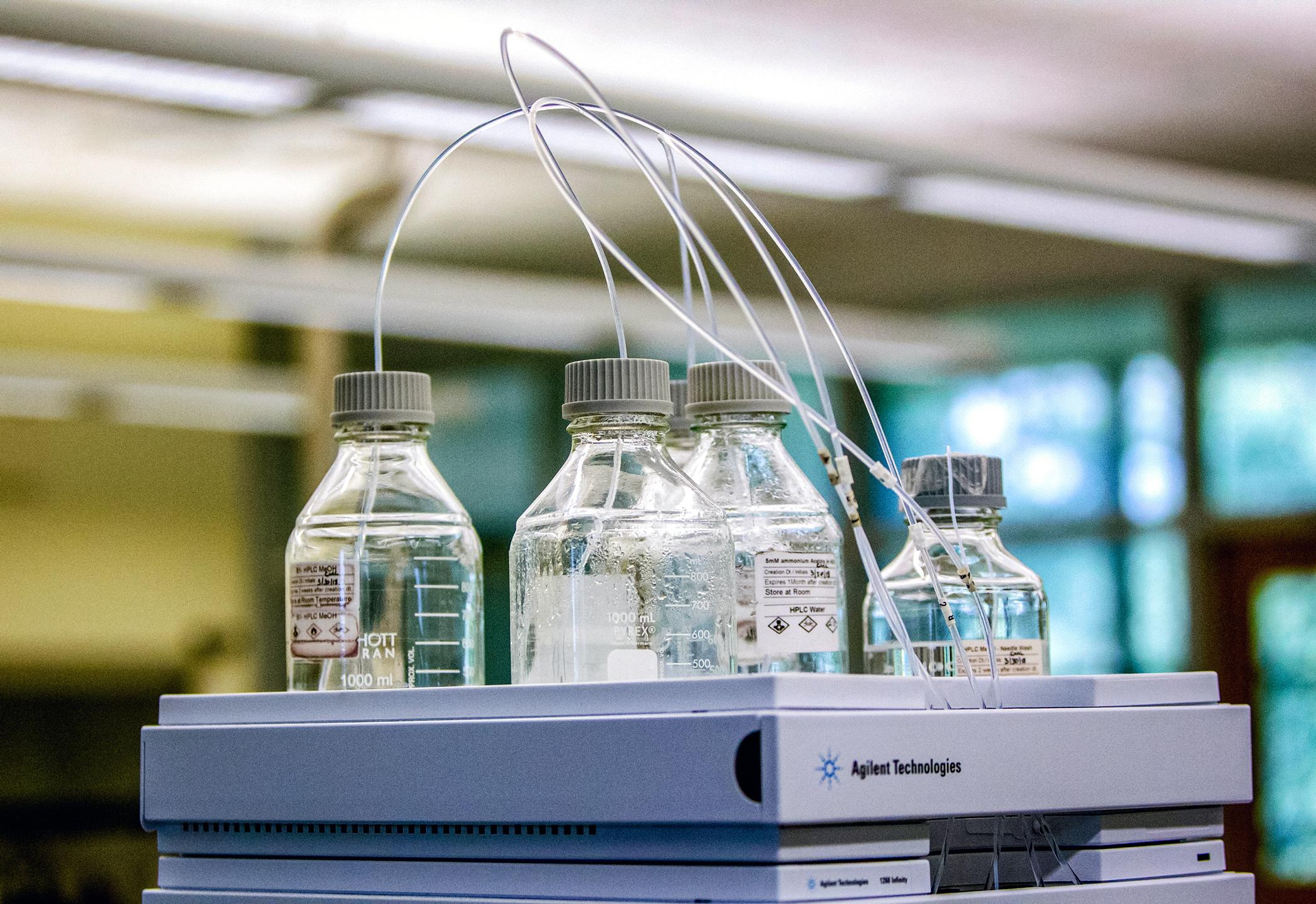
Equipment used to test for perfluoroalkyl and polyfluoroalkyl substances, known collectively as PFAS, in drinking water at Trident Laboratories in Holland, Mich., on June 18, 2018. Cory Morse/The Grand Rapids Press via AP
Life Cycle Consideration
“As someone deeply embedded in the water filtration business for decades, I can affirm that the presence of PFAS in drinking water is a pressing public health concern,” Brian McCowin told The Epoch Times.
McCowin is the service manager at McCowin Water, the business his father started.
“To manage PFAS better, collaboration between private sectors like ours and regulatory bodies is key,” McCowin said.
“We’ve successfully steered complex water issues by prioritizing ethical practices and transparency with clients. This approach could inspire improved standards and accountability across the board.”
Pillay also thinks cooperation is the fastest way to mitigate PFAS in American water.
“I think partnerships between private companies and government bodies can speed up solutions. Public-private partnerships would bring together the resources and expertise needed to drive faster water treatment innovations,” he said.
“If we’re going to manage this PFAS contamination better, we need both sectors working together, sharing knowledge, and accelerating the development of advanced filtration systems.”
Although filtration has always been the go-to solution for removing PFAS in water, some researchers believe the scope of the contamination requires a new approach.
An environmental engineering team at the University of California–Riverside (UCR) published a study in July that discovered a special bacteria that can destroy certain types of forever chemicals. The microbes are already prevalent in wastewater.
In their observations, researchers noted the bacteria attack the previously impenetrable carbon-fluorine bond in PFAS compounds. This is a critical step towards removing the “forever” part of the chemicals.


A water district spokesman explains the ultraviolet light treatment process, the last stage of a three-part water purification system involving microfiltration, reverse osmosis, and ultraviolet light treatment to transform waste water into potable water, at West Basin Municipal Water District water recycling facility in El Segundo, Calif., on Sept. 14, 2015. Robyn Beck/AFP via Getty Images
“This is the first discovery of a bacterium that can do reductive defluorination of PFAS structures,” study author Yujie Men stated.
This isn’t the only breakthrough to come out of UCR this year. Another team led by chemical and environmental engineering professor Haizhou Liu developed a process that takes advantage of the high salt levels at water treatment plants and uses them to break the carbon-fluorine bond. This is significant since the same waste salts normally hinder the cleanup process for other chemical pollutants.
The discovery builds on Liu’s 2022 work that shows PFAS can be destroyed by treating contaminated water with short-wavelength ultraviolet light, without creating toxic byproducts.
“We were looking at PFAS with different carbon chains, short chains, and we also looked at salty wastewater that has a high concentration of chloride and sulfate,” Liu stated. “The results show that the salinity in wastewater acts as a catalyst when receiving the UV light to make this process even more effective and much faster.”
These new treatment methods show promise, but experts say it’s important to proceed with caution to avoid swapping one environmental problem for another.
“Remediation strategies are chosen that can decrease PFAS levels in water to applicable health-based criteria and thereby limit exposure of local populations to PFAS through ingestion of drinking water,” a March study published in the journal Remediation stated.
“However, this approach does not consider the potential for human exposure throughout the life cycle of the remediation technology, in which spent media may need to be disposed of, regenerated, or destroyed over the many years the technology is likely to be in place.”
Methods researchers identified as needing evaluation to prevent environmental release and permit safe disposal of contaminants include filtration techniques such as activated charcoal and chemical treatments.
Pillay and McCowin agree that a careful approach is needed when removing PFAS from water, especially when using newer ideas such as microbes.
“While this could revolutionize how we handle contamination, scaling this to treat municipal supplies will require significant research to ensure no adverse ecological impacts arise,” McCowin said. “My experience with new technologies in water filtration highlights the need for rigorous testing before widespread deployment.”


A water researcher pours a water sample into a glass bottle as part of drinking water and PFAS research at the U.S. Environmental Protection Agency Center for Environmental Solutions and Emergency Response in Cincinnati on Feb. 16, 2023. Joshua A. Bickel/AP Photo
Pillay concurred and said using bacteria to tackle PFAS in water is interesting. He said he has seen “microbial solutions” work in other types of clean-up scenarios but scaling it up for public use presents a whole different challenge.
“That’s where it gets tricky. When we’ve introduced new systems in mining, scaling up often comes with unforeseen challenges, and I’d expect the same here. You have to consider things like the bacteria’s effectiveness across different water conditions and the potential ecological impacts. If we’re not careful, we could end up causing more harm than good,” he said.
Taking Action
PFAS are still pouring out of taps in U.S. homes. At a household level, special filters are currently the most effective method for removing forever chemicals from drinking water.
“For homeowners, using reverse osmosis filtration systems is one effective method to tackle PFAS contamination. These systems have been proven to reduce ‘forever chemicals’ significantly,” McCowin said.
He also said maintaining and disposing of old filters responsibly is critical to avoid any secondary pollution.
Pillay also believes filtration is the best option for Americans who want to drink PFAS-free water at home, but recommends ones that use an activated carbon block.
“Here’s the thing: These filters need regular replacement to stay effective. I’ve seen it too many times where systems fail simply because upkeep wasn’t prioritized. For homeowners, staying on top of filter changes is crucial to reducing exposure. It’s not a complete solution, but it’s a good start,” he said.
When asked about the safe disposal of PFAS-saturated filters, Pillay said it’s a catch-22 situation. “This reminds me of something we face often in my industry, solving one problem sometimes creates another.”


A handyman explains a new water filter to homeowners in Shiloh Commons in Flint, Mich., on Jan. 21, 2016. A reverse osmosis filtration system is an effective method for homeowners to remove PFAS from drinking water, according to Brian McCowin. Sarah Rice/Getty Images
Just throwing the spent filters in regular landfills may result in PFAS getting into the soil or air. In April, the EPA released interim guidelines that covered options for safe disposal. Ones that were considered “lower potential” for environmental release than others include underground injection wells, hazardous material landfills, and thermal treatment.
Pillay said burning the filters may create a different problem since PFAS are unique among hazardous waste. “I know from my experience with hazardous materials that incineration is often suggested, but with PFAS, burning it at high temperatures could lead to toxic byproducts in the air. So, we need to think carefully about how we handle the waste we’re creating.”
He added, “If we don’t, we could end up trading water contamination for air pollution. It’s a tough balance and one that requires a lot more thought before making any decisions.”
What the Evidence Says about Fluoride in Drinking Water

.jpg)


RFK, Jr., and other potential and current government officials have spread shaky health claims about fluoridated water. Scientists explain the evidence behind its safety and benefits
Municipalities across the U.S. have been safely adding fluoride to their tap water for decades, and reams of data prove the mineral has worked wonders in strengthening enamel and preventing tooth decay. But communities could soon start removing or lowering levels of fluoride in public drinking water as misinformation about its purported harms gains dangerous momentum among media outlets and a growing number of prominent political figures.
This month Robert F. Kennedy, Jr.—President-elect Donald Trump’s current nominee for the next secretary of the U.S. Department of Health and Human Services (HHS)—fueled a fluoride furor on social media when he called the mineral “industrial waste.” Kennedy, a former presidential candidate, inaccurately claimed fluoride exposure could lead to arthritis, bone cancer, thyroid disease, IQ loss and neurodevelopmental conditions. He has said he would advise against adding it to tap water—a practice that currently reaches more than 209 million Americans.
It remains unclear whether the incoming Trump administration could effectively ban water fluoridation: current laws let state and local governments make the decision. But at the federal level, fluoridation opponents could deploy the Safe Drinking Water Act, which regulates water contaminants nationally. They could also take advantage of a recent federal court decision: In September a California district court judge ordered the Environmental Protection Agency to set stricter regulations on tap water fluoride levels, arguing that the HHS’s national concentration recommendations might lower children’s IQ scores. But the judge leaned heavily on a recent controversial scientific report that had been rejected twice in peer review for a lack of rigor.
“His conclusion was misguided—and an overreach,” says Charlotte W. Lewis, a pediatrician and dental care researcher at the University of Washington School of Medicine. She notes that widely accepted research shows water fluoridation to be an effective disease-prevention measure, especially for people in communities with less access to dental care.
The EPA is currently deciding whether to appeal the district court’s order. But the Trump administration could sway the outcome by reversing any EPA decision made under outgoing president Joe Biden. And Kennedy’s rhetoric alone could persuade some individuals or communities to avoid fluoride-containing water. Since 2010 more than 170 U.S. cities, towns and counties have voted to halt fluoridation, according to one antifluoride group’s records. More are expected to follow suit: local lawmakers in Kentucky and Georgia recently sought to reverse their state’s fluoride mandate.
Below, Scientific American wades into the history and science of fluoridated drinking water by addressing some common questions.
Why do public health agencies recommend water fluoridation?
Towns and cities across the U.S. began adding fluoride to drinking water in the late 1940s, after studies of thousands of kids showed that communities with naturally occurring low levels of fluoride in their water supply experienced dramatically less tooth decay. The mineral—which is found in rocks, soil and water—prevents and repairs enamel erosion caused by oral bacteria. Today water utilities dissolve trace amounts of one of three fluoride-containing chemical additives in tap water. The U.S. Centers for Disease Control and Prevention’s recommended concentration is 0.7 milligram of fluoride per liter of water (an amount that is equivalent to about three drops of liquid per 55-gallon barrel). Facilities are required to monitor and report fluoride levels on a daily and monthly basis.
Fluoridating city water supplies initially slashed kids’ cavity rates by 50 to 70 percent and lowered adults’ rates by 20 to 40 percent, vastly reducing tooth pain, infection and loss. But now that toothpaste and beverage companies also add fluoride to their products, the benefits of community water fluoridation have decreased: several credible studies estimate that fluoridated water now reduces child and adult tooth decay by about 25 percent. The CDC and the American Dental Association emphasize that this still remains a significant benefit—and meaningfully shrinks dental health disparities.
A 2022 KFF poll found that dental services were the most common form of health care that adults put off because of high costs. Today at least 68.5 million Americans lack dental insurance, according to a 2023 survey by the CareQuest Institute for Oral Health. Having multiple fluoride sources offers peoples’ teeth much needed protection, says Susan Fisher-Owens, a University of California, San Francisco, Medical Center pediatrician, who studies barriers to children’s dental health. For people who cannot regularly access fluoride-containing dental products, fluoridated tap water provides a crucial—and cost-effective—baseline amount of the mineral. “The beauty of community water fluoridation is that it’s equal access,” she says.
Can fluoridated water pose risks to health?
In children who are still developing mature teeth, chronic fluoride overexposure can cause dental fluorosis, a condition that disrupts the uniform color and texture of enamel. Mild and moderate cases include harmless, albeit unattractive, white streaks or patches. Severe cases cause more conspicuous reddish-brown stains and pitted enamel, which can raise the risk of tooth decay.
To prevent severe dental fluorosis, the EPA requires public water systems to warn community members when their water sources exceed a fluoride level of two milligrams per liter (2 mg/L). That is around three times higher than the 0.7 mg/L concentration recommended by the HHS. Fluoride also appears in some foods, beverages and dental products but at small amounts that do not meaningfully contribute to a risk for dental fluorosis—except in cases where children regularly swallow large amounts of toothpaste. (Cute marketing and candylike flavors can sometimes encourage this.)
At extremely high concentrations—around twice the level that causes severe dental fluorosis—fluoride can accumulate in bones, weakening them and causing joint pain. But skeletal fluorosis is exceedingly rare in the U.S., which bans public water supplies from containing such high concentrations.
An apparent association between excessive fluoride exposure and lower IQ scores in children emerged in the 1990s and early 2000s from studies of rural villages in China, where wells had fluoride levels high enough to damage bones. But such findings do not apply to U.S. communities, which allow far less fluoride in water. The studies were also small and poorly designed, failing to account for pervasive contaminants produced by burning coal and peat. Continued research could not identify a clear mechanism that explains how fluoride might damage the developing brain. This prompted many scientists to question the link, Lewis says.
Then, in 2019, a JAMA Pediatrics study on pregnant people in Canada raised concerns about fluoride levels close to those that are currently recommended in the U.S. The small study found that if participants had higher fluoride levels in their urine during pregnancy (around 0.4 mg/L) and gave birth to a boy, on average, their son had slightly lower IQ test scores by the time he was three to four years old. (This finding did not apply to daughters.) But fluoride levels in a pregnant person’s urine do not indicate how much of the mineral that individual or their embryo or fetus actually takes in, explains Loc Do, an oral epidemiologist at University of Queensland in Australia, who wasn’t involved in the paper. The researchers also neglected to administer IQ tests in a standardized way, potentially skewing their results, and did not examine other factors correlated with a child’s IQ, such as maternal breastfeeding.
These studies still roused alarm, leading the HHS’s National Toxicology Program (NTP) to launch a review of the science in 2016. Its report, released in August 2024, claimed to have determined, “with moderate confidence,” that fluoridated water at concentrations of 1.5 mg/L—twice the average level found in U.S. water supplies—harms children’s IQ. (The report’s authors noted that the review did not address currently recommended exposure levels or “assess the benefits of the use of fluorides in oral health or provide a risk-benefit analysis.”)
But before it was even released, the agency’s report twice failed to pass scientific review from the National Academies of Sciences, Engineering, and Medicine, an independent research body. The most recent edition skipped independent review. The American Dental Association and the American Academy of Pediatrics criticized the latest report for generating conclusions from a small and weak body of research—and for omitting much larger studies that showed no neurocognitive threat at all from community water fluoridation.
“I wish we could put the genie back in the bottle on NTP,” says Steven Levy, a dental health care researcher at the University of Iowa. Despite having “some fundamental flaws,” the agency’s report has swayed many laypeople and some scientists who are unfamiliar with fluoride research. “Coming from such a well-regarded National Institutes of Health organization gives [the report] more credibility than it should have,” he says.
As a case in point, Do recently led a rigorous study of more than 2,500 kids in Australia that found that drinking water with fluoride as concentrated as 1.1 mg/L didn’t negatively affect children’s cognitive, emotional or behavioral development in their first five years of life. And a 2023 meta-analysis by Fisher-Owens and other dental experts, tasked with the same work as the National Toxicology Program, concluded that fluoride exposures up to 1.5 mg/L had no measurable effect on children’s IQ.
What might happen if more people or local governments reject water fluoridation?
Studies show communities that cease water fluoridation generally see more cavities in kids—and consequently incur higher dental bills. But the extent to which fluoride removal affects a population’s health varies because of factors such as diet and local dental practices.
After Israel nixed water fluoridation in 2014, for example, kids aged three to five required twice as many dental procedures as before. A comparison of two cities in Alberta, meanwhile, found that, among second-graders who grew up without any exposure to fluoridated water, the prevalence of cavities was 10 percent higher than that of their neighbors who were exposed. And children in Alaska who were younger than six years old and on Medicaid (the federal-state insurance program that covers most people with low incomes) developed an average of one additional cavity per year, requiring $300 more in dental care.
Public health researchers expect the brunt of fluoride removal to fall on people with low incomes, pre-existing dental conditions, or physical or cognitive disabilities. Levy believes that many healthy people would likely be able to maintain adequate dental health or to afford occasional cavity treatment, but he emphasizes that marginalized people tend to have fewer prevention and treatment options for tooth decay. Socioeconomic barriers can make it difficult for a person to regularly brush and floss their teeth, maintain a healthy diet or access dental care.
Local governments could mitigate negative health outcomes by distributing free toothbrushes, toothpaste tubes and bottles of fluoridated water to people who request them. Without coordinated action, however, people in communities that remove fluoride from the public supply will need to take more diligent care of their teeth.
Experts underscored the importance of brushing twice a day with fluoridated toothpaste, limiting sugar intake, particularly in the form of sodas and juices, and consulting a dentist or pediatrician about additional preventative measures. The U.S. Preventive Services Task Force—an independent panel of primary care experts—currently recommends that children under age five who do not have access to sufficiently fluoridated water receive oral fluoride supplements. Both children and adults can also benefit from receiving regular fluoride varnishes (a temporary enamel coating of highly concentrated fluoride) or plastic sealants (a semipermanent protective layer for tooth surfaces and crevices) at the dentist’s office.
Some specialized water filtration methods, such as reverse osmosis and the use of activated alumina, are designed to capture lead and other contaminants and can also sift out fluoride. (Common activated carbon filters such as Brita and Pur filters do not remove the mineral.) Experts say drinking only filtered or purified water may potentially cause insufficient fluoride intake, but occasional use isn’t a health concern.
Some dental products do not contain fluoride, such as hydroxyapatite toothpaste, which is approved in Canada and Europe.* Hydroxyapatite has received some hype in American media outlets, and small and limited studies show it to be similarly effective to fluoride toothpaste. Other experimental fluorideless toothpastes, however, have shown positive results that aren’t replicated in larger trials, says Gary Slade, a dental health epidemiologist at the University of North Carolina Adams School of Dentistry. “Maybe in five years, I’ll be giving [hydroxyapatite] a thumbs-up,” Slade says. “For now, I’d like to see some more studies.”
Public health experts also worry the current political frenzy around fluoride could feed more misinformation about effective health practices—including vaccinations. “Uncritical acceptance of these methodologically deficient studies will only encourage more poor-quality studies,” says Jay Kumar, a retired epidemiologist, who co-authored the 2023 meta-analysis. “If we keep perpetuating bad science, people are going to stop trusting government reports.”
Resources
scientificamerican.com, “What the Evidence Says about Fluoride in Drinking Water.” By Saima S. Iqbal;
How We Sold Our Soul Postings
https://common-sense-in-america.com/2022/04/05/how-we-sold-our-soul-accommodation-and-compromise-in-religion/
https://common-sense-in-america.com/2022/03/18/how-we-sold-our-souls-operation-paperclip/
https://common-sense-in-america.com/2022/03/22/how-we-sold-our-soul-kansas-nebraska-act/
https://common-sense-in-america.com/2022/04/15/how-we-sold-our-soul-the-treaty-of-versailles/
https://common-sense-in-america.com/2022/04/22/how-we-sold-our-soul-cepi/
https://common-sense-in-america.com/2022/05/13/how-we-sold-our-soul-three-fifths-compromise-and-slavery/
https://common-sense-in-america.com/2022/05/31/how-we-sold-our-soul-the-munich-compromise-of-1938/
https://common-sense-in-america.com/2022/06/07/how-we-sold-our-soul-the-missouri-compromise/
https://common-sense-in-america.com/2022/06/17/how-we-sold-our-soul-the-dred-scott-case/
https://common-sense-in-america.com/2022/07/12/how-we-sold-our-soul-the-fugitive-slave-act-of-1850/
https://common-sense-in-america.com/2022/07/29/how-we-sold-our-soul-biden-wins-in-2020/
https://common-sense-in-america.com/2022/09/09/how-we-sold-our-soul-the-plutonium-files/
https://common-sense-in-america.com/2022/09/23/how-we-sold-our-soul-the-yalta-conference/
https://common-sense-in-america.com/2022/09/30/how-we-sold-our-soul-what-do-the-cia-lsd-and-a-french-town-have-in-common/
https://common-sense-in-america.com/2022/10/11/how-we-sold-our-soul-chinese-exclusion-act-of-1882/
https://common-sense-in-america.com/2022/10/14/how-we-sold-our-soul-plessy-v-ferguson-1896/
https://common-sense-in-america.com/2022/10/18/how-we-sold-our-soul-the-people-of-the-state-of-california-v-george-w-hall/
https://common-sense-in-america.com/2022/11/08/how-we-sold-our-soul-project-shad-shipboard-hazard-and-defense/
https://common-sense-in-america.com/2022/11/15/how-we-sold-our-soul-the-exploitation-of-the-vulnerable/
https://common-sense-in-america.com/2022/11/22/how-we-sold-our-soul-toxic-treatment-fluorides-transformation-from-industrial-waste-to-public-health-miracle/