
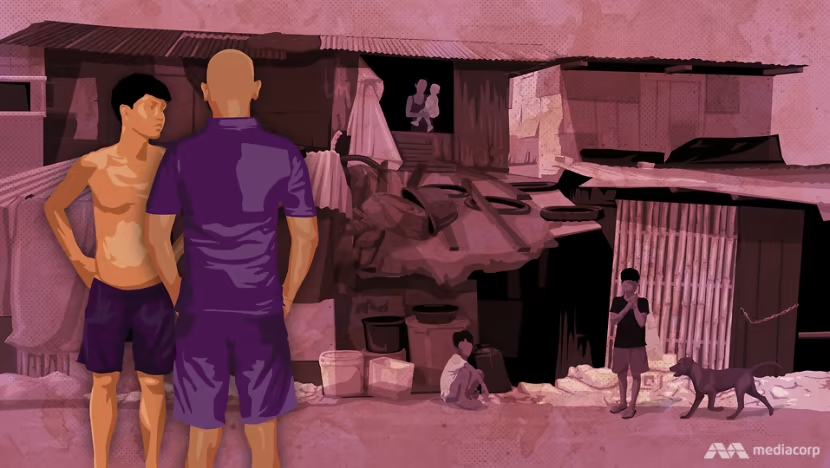

Inhumane trade of human organs
MANILA – More than a sad story, the news about the illegal kidney-for-sale scheme uncovered in Bulacan province last week is a study in desperation and the lengths people will go for a chance at a precious lifeline.
That applies both to vulnerable people forced to sell their organs for huge sums that could feed their families for months, and well-off clients who bite the bullet by transacting with criminals to prolong their life or that of their loved ones.
On the surface, it looks like a victimless crime, a win-win solution for donors and donees alike. But the power imbalance between them leads to a gross disparity in desired outcomes, tipping the scales in the latter’s favor, while the former are left to bear the brunt of the inhumane operation. They may walk away with a few hundred thousand pesos in their pockets but with one kidney missing and a future that is a little less certain.
The true villains in this story, however, are the organ traffickers who served as the bridge between these two groups of people in the interest of greed, and the health professionals who violated their oaths to enable them.
Alleged ringleader
On Tuesday, the National Bureau of Investigation (NBI) filed criminal complaints against four persons involved in the organ trafficking racket: the alleged ringleader Allan Ligaya, a nurse at the state-run National Kidney and Transplant Institute (NKTI) in Quezon City, who “remains at large,” and three others, Angela Atayde, Marichu Lomibao, and Dannel Sicat, who were arrested in an NBI operation on July 11.
Nine victims, aged 25 to 35, were rescued during the raid on their rented house in Barangay Tungkong Mangga in San Jose del Monte City, Bulacan, where the trafficked donors were kept, according to the NBI. By the time the authorities stormed in, four of the victims had already parted with one of their kidneys, for which they were paid P200,000 each, the NBI said.
The three arrested suspects face charges of qualified trafficking in persons in violation of Section 4(h) of the Expanded Anti-Trafficking in Persons Act, a nonbailable offense.
Under the law, it is considered an act of human trafficking to “recruit, hire, adopt, transport, transfer, obtain, harbor, maintain, provide, offer, receive or abduct a person, by means of threat or use of force, fraud, deceit, violence, coercion, or intimidation for the purpose of removal or sale of organs of said person.”
Sale, purchase prohibited
Among medical workers and professionals, the sale and purchase of kidneys is prohibited under the Department of Health’s Administrative Order No. 124, series of 2002. Violations by erring medical practitioners are subject to administrative sanctions.
The NKTI has confirmed that Ligaya is a staff nurse at the government hospital, where he has been working for 23 years.
“He could not do the operations himself, because he is not a surgeon. His work also does not give him access to organ donors and recipients, since the unit he works with is involved in serving patients needing minor surgical, urological, and endoscopic procedures, and not transplant procedures,” Dr. Rose Marie Rosete-Liquete, NKTI executive director, said.
For now, there is no basis to impose disciplinary actions on Ligaya, as the NBI has yet to coordinate with the hospital on the allegations.
The NKTI, however, has vowed to promptly turn over its employee to the authorities if needed.
It’s understandable that some would be tempted to try to buy a kidney from vendors, given the 7,000-long queue at the NKTI’s deceased donor registry in its Human Organ Preservation Effort or HOPE Office.
But often, this comes at the expense of the marginalized.
‘Economic vulnerabilities’
The Department of Justice said the victims in the Bulacan raid had been recruited “under the pretense of alleviating their financial burdens by selling their kidneys” by traffickers who took advantage of their “economic vulnerabilities.”
What about the doctors who performed the transplants? To date, no surgeon involved in the operation has been identified even though it’s plain as day that medical practitioners must have taken part.
It’s true humans can live normal lives with one healthy kidney but it’s just as true that donating an organ does not come without risk. Were the trafficked donors aware of potential complications like higher blood pressure or a slightly elevated chance for future kidney failure?
The NBI must get to the bottom of this barbaric trade and unmask everyone involved, especially the unethical health professionals among them. The NKTI and other hospitals must cooperate fully in the task.
Amid the shortage of kidneys, the wise way forward is for the government to promote and popularize being an organ donor among Filipinos, be it for loving relatives or perfect strangers.
Let us be clear: giving up a kidney or another organ with no expectation of reward is a selfless, noble act; exploiting the poor and desperate to get them to sell theirs is the height of evil opportunism.
How the Philippines’ Human Organs Trade Exploits the Vulnerable
In the shadowy corners of the Philippines, a grave and unsettling reality unfolds—one that remains largely veiled from the public eye. This is the realm of the inhumane trade of human organs, a heinous market that thrives on the suffering and exploitation of the most vulnerable. As the sun sets and darkness envelops the archipelago, an illicit network of traffickers emerges, trafficking in the most precious of human commodities—organs. These are not mere tales of crime but stark portrayals of human suffering and moral decay, woven into the fabric of a society struggling to confront this ghastly underworld.
The trade of human organs, often referred to as a ‘black market’ phenomenon, is a dire issue in the Philippines. It capitalizes on the poverty-stricken and the desperate, exploiting their dire circumstances to fuel an underground economy driven by greed and indifference. Within this context, lives are torn apart not just by the physical removal of vital organs but by the profound emotional and psychological trauma that follows. Imagine for a moment, a young mother, driven to despair by her inability to afford a life-saving treatment for her child. In a heart-wrenching decision, she might be coerced into selling her own organs, her desperation metamorphosing into a nightmarish reality where the sanctity of her body is violated, all in the name of survival.
The operation of this illegal trade is as intricate as it is appalling. Organ trafficking syndicates operate with a chilling efficiency, weaving a web of deceit and exploitation. They prey on individuals who are often lured by promises of quick financial gain or driven by medical emergencies that render them vulnerable. These traffickers exploit the gaps in the legal system and the inadequacies in medical oversight to facilitate their grim trade. Once ensnared, victims are often subjected to brutal procedures conducted in unsanitary and makeshift facilities. These surgeries, performed without proper anesthesia or medical care, inflict unimaginable pain and suffering on those who are already at their most vulnerable.
The human cost of this inhumane trade extends far beyond the immediate physical harm. Victims, many of whom are poor and marginalized, face not only the loss of their organs but also a shattered sense of dignity and self-worth. The psychological scars left by such exploitation are deep and enduring. Survivors of this barbaric practice often grapple with feelings of betrayal and dehumanization, struggling to rebuild their lives in the aftermath of their ordeal. The trauma of such experiences can be lifelong, affecting not only the individuals but their families and communities as well.
In the broader societal context, the existence of such a trade highlights stark disparities in wealth and access to healthcare. The Philippines, with its significant economic inequality, provides a fertile ground for such exploitation. The stark contrast between the affluent and the impoverished is not just a socioeconomic divide but a chasm that enables the exploitation of the most desperate. As wealth concentrates in the hands of a few, the less fortunate are left increasingly vulnerable, their desperation a tool for those willing to exploit it. The availability of such a market for human organs underscores the urgent need for systemic reforms, not just within the healthcare system but across broader societal structures.
Addressing this crisis requires a multifaceted approach, combining legal reforms, heightened vigilance, and a commitment to human rights. Law enforcement agencies must be empowered to combat these criminal networks with greater efficacy. This involves not only targeting the traffickers themselves but also dismantling the complex systems of corruption and complicity that enable their operations. Additionally, the role of healthcare professionals and institutions cannot be overlooked. Ensuring stringent protocols and ethical standards in medical practices is crucial to preventing the misuse of medical procedures for illicit purposes.
Equally important is the need for awareness and education. Raising public consciousness about the realities of organ trafficking can play a critical role in preventing it. Educational campaigns that inform people about the risks and signs of trafficking can empower individuals to protect themselves and others. Moreover, fostering a culture of compassion and solidarity can help counteract the dehumanizing effects of exploitation, reinforcing the value of every individual’s dignity and humanity.
The fight against organ trafficking in the Philippines is not just a battle against a criminal trade but a struggle for justice and human dignity. It requires the concerted efforts of government bodies, civil society, and international organizations. By addressing the root causes of poverty and inequality, strengthening legal frameworks, and promoting ethical medical practices, there is hope for eradicating this grievous injustice. Every action taken in the fight against this inhumane trade is a step towards restoring the sanctity of human life and ensuring that such exploitation finds no refuge in the shadows of our society.
In this relentless struggle, the stories of those who have suffered are not just cautionary tales but urgent calls to action. Their experiences, marked by pain and resilience, remind us of the imperative to confront and dismantle the systems of exploitation that persist in our world. As we grapple with the harsh realities of the inhumane trade of human organs in the Philippines, we are challenged to reflect on our collective responsibility to stand against such injustices and work towards a future where every individual is treated with the dignity and respect they deserve.
Philippines Bans Kidney Transplants for Foreigners
The Philippines is banning kidney transplants for foreigners, as part of a government crackdown on a growing but illicit trade in human organs bought from the poor, officials said Tuesday.
The ban is expected to take effect next month. Foreigners who violate it, as well as middlemen in the transaction, can be jailed for up to 20 years and fined as much as two million pesos, or about $48,000, the health secretary, Francisco T. Duque III, said at a news conference.
Foreigners who are related to Filipino citizens by blood are exempted from the ban, Mr. Duque said.
Although the sale of human organs has always been illegal in the Philippines, kidney transplants have become a lucrative underground business, with hospitals classifying the kidneys as donations to evade the law, according to Amihan Abueva, the regional director in Manila of Asia Acts Against Child Trafficking, a nongovernmental group that lobbied for the ban.
According to Mr. Duque, kidney transplants to foreigners increased more than 60 percent between 2002 and 2006. The social welfare department said 500 transplants were performed on foreigners last year alone.
Ms. Abueva said hospitals were already exceeding the government-mandated cap on kidney transplants for foreigners.
Under Health Department regulations, only 10 percent of a hospital’s kidney transplants may be performed for foreigners.
“These transplants are done openly in the best hospitals,” Ms. Abueva said. A typical kidney transplant costs about $95,000, she said.
Organ transplants, including those for kidneys, are among the services hospitals offer under the government’s Philippine Medical Tourism Program, aimed at foreigners. Some of these hospitals, such as the National Kidney and Transplant Institute, are owned by the government.
As a result of the thriving trade in kidneys, many poor Filipinos have been willing to sell their kidneys for $2,000 to $10,000, a huge sum for an impoverished family.
According to Ms. Abueva’s group, kidney brokers scout for possible “donors” in the poorest slums in Manila and in the provinces. These brokers often are paid $1,000 to $1,500 per transplant.
The Philippine news media have produced numerous reports about donors’ dying because of complications from the transplants.
There have also been reports of the brokers housing the donors for months in apartments in Manila and nearby areas until they can find foreign buyers, who are mostly from Europe, the Middle East and richer Asian countries like Japan and South Korea.
On April 21, the police raided such a house in a province just north of Manila and arrested three members of a gang that was selling kidneys to foreigners, the police said. They found nine donors in the house.
“I can barely provide for my wife and children,” one of them told The Philippine Daily Inquirer. “I just wanted to earn some money and give it to them.” He said he was promised 120,000 pesos, or about $2,800, for his kidney.
The World Health Organization has identified China, Pakistan, Egypt, Colombia and the Philippines as the world’s leaders in the illegal sale of kidneys.
Officials have said that because some of these other countries have tightened regulations on transplants, more foreigners seeking kidneys will come to the Philippines unless preventive action is taken.
Mr. Duque, the health secretary, said the ban was meant to protect poor Filipinos.
“The poor always end up as the ones being abused,” he said. “The sale of one’s body parts is condemnable and ethically improper. We have to stop it.”
Kidney for sale: Inside Philippines’ illegal organ trade
MANILA: Reyna comes back home looking exhausted. It has been a long day at the Philippine General Hospital. She spent most of it with two potential donors, whose kidneys could save someone’s life. They could net her some extra income, too.
Reyna is one of the ‘kidney hunters’ who roam Manila’s most impoverished communities in search of living donors. What she does is illegal. Under Philippine law, her action constitutes human trafficking for organs, a grave crime that could land her 20 years in prison and a hefty fine.
Still, the grinding poverty that defines her life is as challenging as the risk of spending decades behind bars.
Reyna works on a commission basis. She sources potential donors and recruits them for medical exams when an order is placed. Each time she manages to bring someone for a health check, she gets 500 Philippine pesos, or about US$10. Candidates must pass a series of health tests and x-rays before any transplant can take place. The process could take a year to complete, giving her ample money making opportunities.
The reward is enticing enough to make Reyna cross into the Philippines’ illegal organ trade that has thrived underground and preyed on poor and vulnerable victims for decades.
“The government can’t really stop it. They can’t stop people who are in need, people who are just trying to make ends meet,” said Reyna inside her ramshackle home – a tiny room near a dirty gutter in one of Manila’s slums.
The latest order came from a retired civil servant with advanced kidney damage. He lives on dialysis, she said, and is willing to pay 120,000 pesos (US$2,300) for a healthy kidney from a living donor.
“It’d be unfair if I can’t help a fellow countryman who desperately needs a donor,” she said. A lanyard around her neck says she works for a government department.
The Philippines has an international reputation as one of the global hotspots for organ trafficking. In 2007, it was named as one of the organ-exporting countries in the World Health Organisation’s (WHO) report, along with India, Pakistan, China, Egypt and Colombia.
Following that, the Philippines brought in a stricter anti-human trafficking law in 2009. This contributed to declining rates of living donor transplantation, according to the WHO. The trend was also influenced by increased regulations at hospitals.
Although the Philippine government has made it harder for organ traffickers to exploit the poor and the vulnerable, it has not been able to eradicate the lucrative underground market from the country. In the ongoing attempts to put a stop to it, illegal activity is being monitored by the Inter-Agency Council Against Trafficking (IACAT) under the Department of Justice.
“As of 2019, there are about 51 cases for organ trafficking monitored by the IACAT Secretariat,” IACAT Deputy Executive Director Yvette T Coronel told CNA. One of the cases, she added, was filed in the National Capital Region and the rest in Quezon Province.
However, all the cases were only archived as none of the accused or perpetrators have been arrested, according to Coronel.
“Law enforcement agents are challenged by the fact that there is a lack of complainant for organ trafficking cases. Victims of organ trafficking also do not self-identify as such, which also makes reporting a challenge,” she said.
HOW MUCH IS YOUR KIDNEY?
Organ donation is legal in the Philippines as long as donors and recipients are blood relatives. The law allows family members who meet specific kinship criteria to donate organs among one another. The scope includes parents and children, brothers and sisters, grandparents, and nieces and nephews.

“What we’d like to see is a long-term emotional relationship,” said Dr Benita Padilla, a kidney specialist from the National Kidney and Transplant Institute in Manila.
Without an emotional bond, any organ transplant is illegal among non-relatives. Still, such operations continue in Philippine hospitals as donation has become widely commercialised. Transactions are carried out in the clandestine organ market, which has long been an open secret in the country.
Based on online advertisements, the asking prices for a kidney can go up to 500,000 pesos (US$9,700), depending on negotiations. The usual prices are about 200,000-300,000 pesos (US$3,900-US$5,800). It is common for recipients to bear the cost of food and transport for donor candidates as well as brokers during the lengthy process of medical examination.
Organ trafficking is an organised crime in the Philippines and involves various players. It is driven by widespread poverty and a surge in numbers of patients with renal diseases. In 2016, 21,535 Filipino patients were on dialysis due to kidney failure, according to the Philippine Renal Disease Registry’s annual report. The number increased from 9,716 cases in 2010.
“We’re not so successful in preventing people from developing kidney failure. The root causes behind that are diabetes and hypertension; these incidents are increasing,” Dr Padilla said.
People who need a kidney transplant are largely those who have developed permanent kidney failure and live on dialysis. According to Dr Padilla, some 40,000 patients nationwide are on dialysis but each year, only 500 of them are likely to find their match and can afford the expensive transplant. The cost for an operation ranges from 600,000 pesos to 1 million pesos (US$11,650-19,400).
For wealthy patients, though, money is hardly a problem. Their biggest concern is rather the long waiting list for legally donated kidneys and the painful reality that they may have to spend the rest of their life on dialysis.
FROM PATIENTS TO CRIMINALS
Desperation has driven many kidney patients into organ trafficking. At least 10,000 kidneys are believed to be sold around the world every year, according to Organs Watch, a US-based programme that tracks global traffic in human organs.

In the Philippines, buyers are both Filipinos and foreigners with end-stage kidney disease. They usually hire agents to recruit non-related donors, feign a relationship and falsify documents to trick law enforcement officers and medical professionals.
The agents often reach out to kidney hunters like Reyna, local Filipinos from poor communities with good social connections. Their targets are vulnerable residents with great financial needs who can be easily coerced into selling their organs.
“No rich person of sound mind would willingly donate their organs and these agents know it. That’s why they always look for possible donors in impoverished areas like this community,” Reyna said.
What drives these people to agree is their dreams. They want to be able to afford a house, a car or a tricycle so they could have a stable livelihood.
It is a situation Danilo knows only too well.
On Jul 3, 2002, the then father-of-two entered an operation room at St Luke’s Hospital in Manila. A surgeon took one of his kidneys and transplanted it to a Canadian national. The pair are non-related by blood and do not know each other.
“I wasn’t afraid because I was only thinking of my children’s well-being. I wanted to give them and my wife a house of our own. All I thought was my family’s well-being,” Danilo said. A sinister scar from that day’s surgery looks like a deep slice across his bare torso.
The surgery took six hours. Danilo sold his kidney for 115,000 pesos (US$2,200) but ended up with only 85,000 (US$1,650) after the agent had deducted his share. He used most of the money to buy a house in a Manila slum soon after being discharged. Nine months later, a fire broke out in the community and burnt down Danilo’s home.
“I was devastated to think the money I spent on the house came from selling my organ. I had no parents to turn to and was very upset. I couldn’t do anything but accept what had happened,” he said.
Seventeen years after the transplant, not much has changed for Danilo. He is still poor and lives with his in-laws in the same shantytown, sharing a tiny windowless room below theirs with his wife and five children.
The space looks more like a hole than a home – dark, stuffy and cramped. Everything about it is emblematic of hardship and struggle. Standing there, one can imagine a hand-to-mouth existence within those dilapidated walls – the kind that could easily turn a desperate person into a victim, and a criminal.
“I know it’s illegal but what matters to donors like us is that we can save another life as well as our own. The money we got from doing this is a great help, especially when we don’t have stable jobs,” he said.
Life is good when we have money, money to spend on food and toys for the kids.
‘I WOULDN’T HAVE SOLD MY KIDNEY’
Like other donors, Danilo made sacrifices for his health in saving someone’s life.
With only one kidney left, the welder gets tired easily. He used to work several days in a row but right now, his body cannot make it longer than two. He cannot skip meals either as it will cause him unbearable pain. And lifting heavy objects has become a great challenge.
If Danilo could turn back time, he said he would not have sold his kidney: “I’d rather work endlessly than being in his situation where I get tired easily.”
Many kidney donors are not aware of the side effects of the operation. According to Nancy Scheper-Hughes from Organs Watch, some underage teens in Manila’s slums were even guided by brokers to fabricate names and increase their age to match the requirement.
“They do not understand the seriousness of the surgery, the conditions under which they will be detained before and after the operation, or what they are likely to face with respect to the discomfort or immediate inability to resume their normally physically demanding jobs,” the Organs Watch director and co-founder said in her 2014 report on human trafficking.
Scheper-Hughes has spent the past decade studying the global traffic in human organs. Based on her research, most donors voluntarily enter into transactions only to realise later they have been deceived, defrauded or cheated.
The likes of Danilo are prime targets for organ brokers – poor, uneducated and vulnerable Filipinos who struggle to survive.
“Donor candidates tend to be worried because what we do is illegal,” Reyna said. “They fear it could be an entrapment operation. So I have to convince them I know the patients personally, that we’re friends and I really want to help them live. That’s how I earn their trust.”

Reyna began hunting for kidneys from living donors after her husband sold one of his. She has spent years building contacts with other brokers, buyers and potential sellers around Metro Manila. Sometimes, desperate residents approach her to offer their kidneys.
“I usually approach my neighbours to ask if they want to donate for the right price. Some of them would be scared at first. But after telling them what my husband went through and how he’s still healthy years after giving away his kidney, they feel less afraid,” she said.
‘IT’S THE ONLY CHOICE THEY HAVE’
To curb commercial organ transplants, the Philippine government instituted the National Transplant Ethics Committee in 2002. Their job is to ensure transplantation at 18 accredited facilities nationwide is performed legally, and without commercial dealing.
The committee is tasked with interviewing donor candidates and recipients to confirm their relationship. If the interviews are suspicious, they have the authority to reject the request for transplantation. But even thorough reviews do not always work.
“Is the ethics committee a 100 per cent successful? I’m not sure,” said Dr Padilla.
These people who facilitate the organ trade already know what we’re looking for. They know we’re looking for answers like ‘I’m not selling. I only want to donate my kidney out of altruism’. So now they coach potential donors to give the right answers.
Eradication efforts are being carried out by the Philippine government. According to Coronel, the Inter-Agency Council Against Trafficking and the Department of Health are in the process of reviving and reconvening the National Oversight to Control Trafficking and the National Transplant Ethics Committee.
In 2017, a stakeholder forum on the national organ donation and transplantation program was held in support of the investigation and prosecution of organ trafficking cases, Coronel said. “The Department of Health is also working on standards for operating procedures to evaluate organ donors in the country, she added.
Authorities hope stricter regulations will put an end to the illegal organ trade and prevent traffickers from exploiting kidney patients and poor Filipinos. But in the meantime, kidney hunters like Reyna continue to prey on potential donors in vulnerable communities. Non-related candidates keep telling the right story to the ethics committee, that they are family friends of the recipients or someone close to them.
“Before a series of tests, they have to go through several interviews – with a priest, a doctor, a social worker and a psychologist. They can say they really want to help the patient. But if they decide not to donate their kidney, nobody will force them,” said Reyna.
“For some potential donors, though, it’s the only choice they have to earn money. That’s why they do it.”
Kidney for sale: How organs can be bought via social media in the Philippines

MANILA: Carlos welcomed his newborn baby girl with so much love, and trepidation.
Their midwife had cancelled the delivery at home. So his wife was lying in a hospital bed after an unplanned visit the family could not afford. He had no idea where he could find 14,000 Philippine pesos (US$270) for the hospital bill and his family had not been able to leave the ward, even though they desperately wanted to.
Then a possible solution dawned on Carlos. Years of living in one of Manila’s poorest communities had taught him where to find money in a time of desperation. He logged on to Facebook on Sep 27, 2019, and posted a short message. He hoped it would bring him cash in no time:
I am selling one of my kidneys, contact me. I am serious… No fake transaction please…
Carlos was one of 14 Facebook users on that particular thread who advertised their kidneys for sale. They shared their contact numbers, blood type and their urgent need for money. The thread started on Jul 26 this year and continued to attract organ traders. It is one of many found on the platform.
“When the doctor asked when I’d be able to bring my family home, I felt extremely pressured because I didn’t have the money to get them out. I told him I’d find a way and do what I could to get it,” said Carlos inside his small house in Central Luzon. His baby girl was sleeping soundly in a wooden basket near her frail mother.
“I topped up my phone and made a search on Facebook. I typed ‘kidney for sale’ in the search bar and so many options appeared. Some are looking for donors. Others are offering to buy organs.”

In the Philippines, advertisements for healthy kidneys are common on social media. Typing something along the lines of ‘kidney donation Philippines’ or ‘kidney for sale’ in the Facebook search bar will reveal countless posts by organ brokers, kidney patients and hopeful sellers who want to leverage social media’s reach to complete a deal.
Organ trafficking is nothing new in the Southeast Asian nation. For decades, it has been known globally as a high-risk country for transplant tourism because of its great medical expertise, several transplant facilities and limited national oversight.
What is new is its expansion into the world of social media. But given its clandestine nature, law enforcement officers struggle to keep up with traffickers who carry out the trade behind the anonymity of the Internet.
“It has been observed that all forms of trafficking in persons, whether for sex or labour trafficking, are now being committed through the use of online platforms like social media,” said Yvette T Coronel, deputy executive of the Philippines’ Inter-Agency Council Against Trafficking under the Department of Justice.
“(The) kidney is the most commonly trafficked organ due to its high demand in the black market and the fact that a donor can survive with only one kidney.”

Human trafficking for organs is a serious crime punishable by up to 20 years in prison under Philippine law. But when pushed into despair, the likes of Carlos tend to cave in to a pressing need for money and, in his case, the well-being of their loved ones.
The tricycle driver said he was scared by the idea of selling one of his kidneys but felt he had no other option. He planned to spend the money on the hospital bills, a tricycle of his own and a small business.
“If we can do that, we’ll probably have a chance to improve our lives and move away from our current living conditions,” he said.
‘I’M SELLING MY KIDNEY’
As in many other countries, Facebook is a prevalent social media platform in the Philippines with more than 66 million users. Its popularity has attracted some criminals who want to use it for gain.

In a written statement to CNA, a Facebook spokesperson said there are clear rules that prohibit the buying or selling of regulated goods on the platform, including human organs.
“We remove this content whenever we become aware of it, and we encourage our community to report content that they think might break these rules,” the spokesperson said.
CNA found multiple examples of such posts that contravene Facebook’s rules. However, the platform quickly took action to remove the posts once notified. Facebook also said its law enforcement team works closely with the Philippines’ law enforcement agents to assist them in responding to critical situations.
“We recognize that there are benign and important reasons for people to discuss organ donation on Facebook, for example, encouraging people to become donors, or raising money for an organ transplant, and we allow people to do so in these contexts.”

Still, universal regulation of social media networks has proven problematic. On Facebook, for instance, a number of users in the Philippines have put up posts offering to sell their kidneys openly, and with numerous details – from phone numbers to the results of various health tests, and how they have a healthy lifestyle free from cigarettes and alcohol.
According to Victor Lorenzo, chief of the Cybercrime Division at the Philippines’ National Bureau of Investigation, the illicit trade of human organs remains a thriving and lucrative business in the country. With the Internet, he said, criminals can negotiate in the comfort of their home and remain anonymous.
Still, online communications have their pros and cons.
“If you go online, you could also be monitored online,” Lorenzo told CNA.
Organ sale is illegal. When you engage in this, you must have a facility to communicate with donors, the buyers and those financiers. So they have to communicate. In order to get donors, they have to advertise publicly and openly. They can’t go into the dark web because many people can’t access it. And that’s our advantage
Cybercrime police in the Philippines regularly scan the Internet for suspicious activities. When they pick up a lead on possible organ trafficking, they forward the information to relevant authorities for follow-up operations. Sometimes, Lorenzo added, pieces of information are combined to map a geographical pattern that could narrow down areas in question.
“Behind an online transaction is an actual person,” said the cybercrime agent. “Even though they’re anonymous, at least you have a certain lead on those people behind this transaction, and that’d be enough for us to follow through in an investigation.”
ORGAN SALE: A TICKET TO SURVIVAL
Still, law enforcement officers may not be able to eradicate the organ black market alone. So anti-human trafficking efforts are also being made at the hospitals licensed to perform transplantation. Overseeing these facilities in the Philippines is the National Transplant Ethics Committee, whose main role is to ensure every organ donation is legitimate and free from commercial gains.
“When you say ‘organ donation’, it’s expected to be nonmonetary. It should be purely voluntary, truly altruistic, and free from undue enticement,” said Dr Francisco Sarmiento from the Philippine Organ Donation and Transplantation programme under the Department of Health.
Financial neutrality is required for organ donors and recipients in the Philippine, according to Dr Sarmiento. It means both parties should neither gain or lose financially due to the act of donation.
So any change would more or less lead to that slippery slope towards organ trafficking,” he added. “For living non-related organ donation, this is where the complication sets in.
Through interviews with potential donors and recipients, Transplant Ethics Committees have to determine the willingness of each organ donation and ascertain the intent is not a result of coercion, deception or exploitation. However, there have been reports that certain medical professionals mastermind the illegal transaction and transplant surgery of human organs themselves.
“They call it an ‘all-in package’, meaning they’ll recruit the donor and make arrangements for the operation. Payment will be made through them and they’ll be the one who distributes it to the team,” Dr Sarmiento said.
“We have reports but they still need to be verified. Our law enforcers are informed of this and it’ll be on their part to do the necessary surveillance.”

With the trade expanding online, there are calls for social media companies to do more to curb the illicit proliferation. According to Dr Sarmiento, popular platforms like Facebook and Instagram, which he said are “vehicles for advertisement”, should be engaged in the nationwide human trafficking eradication efforts.
“We also receive social media postings on our own page inquiring about organ sale. That’s why the engagement with the concerned agencies is very important so they could empower themselves or make the legal environment more responsive,” he added.
Back in Central Luzon, Carlos dreams of a brighter future with his family. He managed to borrow some money to pay for the hospital bill and no longer needs to sell his kidney. But that may change if his family ever needs money again in the future, he admits.
“My family are the most important people in my life,” he said. “It’ll always be an option.”
NOTE: Carlos’ real name has been changed to protect his identity.
Organ trafficking has evolved -NBI official
By Jumalynne V. Doctolero
October 1, 2024

QUEZON CITY, (PIA) — The National Bureau of Investigation (NBI) National Capital Region on Tuesday warned that organ trafficking methods have evolved, as the agency intensified its crackdown, recently apprehending perpetrators involved in the illegal sale of kidneys.
During the 19th edition of the Kapihan sa Bagong Pilipinas media forum with NBI NCR Regional Director Rommel J. Vallejo, Senior Investigation Agent Atty. Bethyl Joy P. Porras emphasized the need for public awareness regarding these modern trafficking methods.

“While we often hear urban legends about ‘white vans’ abducting individuals, the reality is that many victims are recruited online to sell their kidneys,” Porras said. “It’s disheartening to see that most crimes are now facilitated through digital platforms.”
She said NBI NCR is continuing its efforts to dismantle these trafficking networks and protect vulnerable individuals from exploitation, reminding the public to remain vigilant against both traditional and digital forms of predatory crime.
The agency also reported that organ trafficking victims were successfully rescued following a recent operation in Quezon City.
“Our latest operation took place in Quezon City, where we arrested individuals involved in this heinous crime,” Supervising Agent Charles Poso said. He noted that the investigation is ongoing, particularly concerning the involvement of a local hospital in the scheme.
While Poso refrained from naming the hospital due to the ongoing investigation, he assured the public that the NBI is dedicated to pursuing legal action against all parties involved, especially those who exploit vulnerable individuals.
“These perpetrators take advantage of people’s desperation, encouraging them to sell their organs,” he said.
According to Poso, the price for a kidney can range from P150,000 to P200,000.
He, meanwhile, shared a troubling account from one victim who reported being underpaid.
“The victim was only given P50,000 after the organ was harvested, leaving him with a debt of P100,000 to the traffickers,” he explained.
The NBI NCR is continuing its efforts to dismantle these trafficking networks and protect vulnerable individuals from exploitation, reminding the public to remain vigilant against both traditional and digital forms of predatory crime.
Human trafficking in the Philippines
Human trafficking and the prostitution of children has been a significant issue in the Philippines, often controlled by organized crime syndicates.Human trafficking is a crime against humanity
With the Philippines having a large migrant population, men are exploited in fishing, construction, and farming jobs. Whereas, women are exploited in more domestic and caretaker roles. Children are exploited for sex and child labor trafficking.
In an effort to deal with the problem, the Philippines passed R.A. 9208, the Anti-Trafficking in Persons Act of 2003, a penal law against human trafficking, sex tourism, sex slavery and child prostitution. In 2006, enforcement was reported to be inconsistent. But by 2017, the U.S. State Department’s Office to Monitor and Combat Trafficking in Persons had placed the country in “Tier 1” (fully compliant with minimum standards of the U.S. Trafficking Victims Protection Act).
Statistics
An undated United Nations Children’s Fund (UNICEF) document estimated that 60,000 to 100,000 children in the Philippines were involved in prostitution rings as of 2009. According to the International Labour Organization (ILO) about 100,000 children were involved in prostitution as of 2009. There is a high incidence of child prostitution in tourist areas. An undetermined number of children are forced into exploitative labour operations.
As of 2020, the Philippines is ranked as Tier 1 in the Trafficking in Persons Report of the United States (US) State Department after substantial efforts.
Problem areas and history
A report published in 2004 by the Vatican stated: The Philippines has a serious trafficking problem of women and children illegally recruited into the tourist industry for sexual exploitation. Destinations within the country are Metro Manila, Angeles City, Olongapo City, towns in Bulacan, Batangas, Cebu City, Davao and Cagayan de Oro City and other sex tourist resorts such as Puerto Galera, Pagsanjan, San Fernando Pampanga, and many beach resorts throughout the country. The promise of recruiters offers women and children attractive jobs in the country or abroad, and instead they are coerced and forced and controlled into the sex industry for tourists.
Puerto Galera
There are numerous cases of child molestation that have been reported in Puerto Galera, a beach resort on Mindoro Island three hours south of Manila. The area is a favorite for foreign child molesters seeking children. Puerto Galera was described in 1997 as one of the Philippines top five spots for child prostitution.
Angeles City
In 1991 a volcanic eruption of Mount Pinatubo forced an evacuation and destroyed much of the Clark Air Base, a major United States military facility located 40 miles (60 km) northwest of Manila, which closed shortly thereafter. Most of the sex trade around the base closed at the same time due to the loss of the GI customers. Mayor Alfredo Lim proceeded to crack down on Manila’s remaining sex industry, causing many of these businesses to relocate to Angeles City, which borders on the closed base, and was becoming a popular tourist destination especially with former GIs. By the late 1990s, UNICEF estimated that there are 60,000 child prostitutes in the Philippines, describing Angeles City brothels as “notorious” for offering sex with children. In 1997, the BBC reported that UNICEF estimated many of the 200 brothels in the notorious Angeles City offer children for sex.
The current trade is dominated by Australian bar operators and sustained by tourists seeking inexpensive sex. In bars catering mostly to foreign men, girls are sold for a “bar fine“. Conditions are sometimes brutal Children and teenagers are lured into the industry from poor areas by promises of money and care, and are kept there by threats, debt bondage and the fear of poverty. Angeles City is one of the largest sex tourist destinations in the world with just over 15 thousand women working in its various sex establishments (brothels, bars and videokes).
In 2005, UNICEF reported evidence of growing child pornography production in Angeles City. Children as young as ten years old have been rescued from brothels in Angeles.
STD cases rose five times. The RHWC treated 1,421 cases in 2005, 2,516 cases in 2006 and 6,229 cases in 2007. Most of the afflicted were women.
Pagsanjan, Laguna
CNN stated in 2010 that “A decade ago, Pagsanjan, located about 60 miles south of Manila, became known as a popular location for men seeking homosexual prostitutes.” Pagsanjan began to attract an increasing number of child molesters. “In the ’80s, Pagsanjan was declared by international gay publications as a paradise for them, a gay paradise, a haven for homosexuals”, said Dr. Sonia Zaide, an activist who is particularly concerned by the expansion of the town’s sex trade to include minors, mostly young boys. Time magazine reported in 1993 that Pagsanjan was a favorite destination for sex tourists seeking children. The Filipino government began a crackdown on the child sex industry in Pagsanjan and 23 people of varying nationalities were arrested. Foreign child molesters take advantage of the poverty, with children often being used as sexual currency by their own parents. The World Bank World Development Report for 1995 reported that the town of Pagsanjan through civic action had dramatically reduced child prostitution.
Davao City
October 5 has become the Day of No Prostitution Campaign in Davao City. In 2005, the Philippine Information Agency reported documented cases of children as young as 10 years old forced into prostitution in Davao. Davao provinces, along with the Caraga region, have become the favorites of child traffickers posing as tourists.
Cebu
In 2001, it was estimated there were 10,000 young girls trafficked into sex slavery in Cebu. “What has become very obvious is a growing market for child prostitutes,” said Father Heinz, a Catholic priest who has been involved for more than a decade in initiatives to beat the pimps and child-traffickers. It was reported in 2009 that Cebu remained a destination, source and transit area for human trafficking, where women and children victims are brought to be “processed”. It was reported in 2005 that Cebu had been the destination of international and domestic trafficking of children, aged from 11 to 17 years old.
Pampanga
More than a dozen of cybersex operations have been busted in the Pampanga province and Angeles City areas, this resulted in the rescue of hundreds of exploited women, most of them minors or below 18 years of age. Hundreds of computers sets have been seized, including sex toys and other gadgets used in the cybersex operations mostly maintained by foreigners. A forum hosted by the Prosecution Law Enforcement and Community Coordinating Service (proleccs) discussed several factors that contribute to the human trafficking problem and these include poverty, the proliferation of underground cybersex through internet and sex tourism.
Lucena City
Lucena ports have been identified by anti-human trafficking advocates as transit points used by syndicates engaged in the recruitment of innocent women from remote areas destined for prostitution dens in other parts of the country.
Subic Bay
In 1988 a Naval Investigative undercover operation based in Subic Bay were offered children for sex as young as four. Many of those involved in the prostitution of children have been brought to justice in the courts. Most of the 16,000 women estimated to have worked the bars around the largest overseas naval base were forced into the sex industry. One 16-year-old child tells of her experience in Subic Bay: “She was locked in a room for a month, starved and force-fed drugs and alcohol to ensure she was addicted and could be more easily controlled. She was often beaten unconscious for refusing to have sex with customers.” Pregnancy, abortion, the spread of disease and drug abuse were just some of the indignities imposed on Filipinas. Despite the US pull-out from Subic Bay in 1992, continues to fester, catering to a new generation of civilian sex tourists. The former naval base, and current visits by American military have been the subject of protests by welfare groups and activists in Subic. Brandishing placards and chanting slogans, members of WAIL and GABRIELA called for justice for all victims of human rights abuses.
Olongapo
Trafficking of Women and Children in Olongapo was rampant during the time of the Subic Naval Base located close by. In 1988, the US Naval Investigative Service confirmed the existence of child prostitution in Olongapo City. After the base closure a new child molesters clientele from countries such as Australia and Europe moved in. Olongapo special prosecutor Dorentino Z. Floresta states, “Politicians do not want people to know that these things are happening in Olongapo,” said Floresta.
Visayas
Eastern Visayas continues to be a source of women and children being sent to Metro Manila brothels and sweatshops. Department of Social Welfare and Development officials said the number of human trafficking cases was increasing. Leticia Corillo, DSWD regional director stated that the victims were mostly children and women. Seventy percent are aged from 13 to 17 years old. A DSWD report, said the Waray towns of Paranas and Jiabong and Calbayog City in Samar province and Mapanas and Las Navas in Northern Samar are considered as human trafficking “hotspots”.
Trafficking of Filipinas to overseas destinations
The US Department of State in July 2001, estimated that about 40,000 Filipino women were trafficked into the sex and entertainment industry in Japan using entertainment visas. A 2007 report by CBC News estimates the number of Filipinas trafficked into Japan for prostitution to be as high as 150,000. Club owners in Japan oblige Filipino entertainers to date their customers during daytime and, in some cases, force them into prostitution. Some of them were sold allegedly to the Yakuza for $2,400 to $18,000. A trafficker earns $3,000–$5,000 for each woman or girl sold in the international sex trade.
Sex tourism
An article in the newspaper Davao Today reports that, according to experts, the growth of tourism in the Philippines in places such as Cebu and Boracay, has given rise to the sexual exploitation of women and children. In a 2004 article, the People’s Recovery, Empowerment Development Assistance Foundation (PREDA) reported in 2004 that ECPAT, which it describes as “a global network that campaigns against child prostitution”, estimates that 300,000 sex tourists from Japan alone visit the Philippines every year. In the same article, PREDA reports, “many others are British.” Local NGO Preda states that the majority of the “customers” (the word used by the children to describe their abusers) are local tourists and about ten percent are foreign tourists. The foreign customers, according to arrest figures compiled by ECPAT Manila rank in frequency as follows: American, Japanese, Australian, British, German, Swiss, other nationalities.
UNICEF noted that child trafficking in the Philippines is the highest incidence of child prostitution in a tourist area.
Sex trafficking
Sex trafficking in the Philippines is a significant problem. Filipina women and girls have been forced into prostitution and been physically and psychologically abused.
Foreign child molesters
The Philippines continued to assist U.S. law enforcement authorities in the transfer to U.S. custody of Americans who sexually exploited children. Foreign child molesters are a major problem in a country like the Philippines. Some foreign child molesters are very well connected and have positions in industry and politics. Profile studies of these child molesters show they come mostly from Europe and are usually well off, married and with children of their own. Some foreign child molesters arrange with bribes and corrupt practices to get the children out of the country and abuse them in another country. The problem of foreign child molesters continues to be reported in the press. It was reported in 1999 that foreign child molesters have operated openly in the Philippines.
In 2008, the Bureau of Immigration (BI) warned of a new modus operandi of foreign child molesters in the Philippines, saying “The child molesters usually meet the mothers, sometimes even the grandmothers, of possible victims online and make them their girlfriends. The women usually let the economically better-off foreigners into their lives and their homes, not knowing that the men would later pounce on their young children.”
It was reported in 2007 that in Angeles, Pampanga (characterized as a hotspot for trafficking and sex trade), child molesters were increasingly using the Internet to lure other child molesters to come to the Philippines. Live video streaming on the Web was reported to show children being sexually abused. Other child molesters were reported to browse personal profiles or lurk in chat rooms to find their victims.
Mail-order bride trafficking
Republic Act 6955 declares as unlawful “the practice of matching Filipino women for marriage to foreign nationals on a mail order basis.” It is also unlawful under the R.A. 9208, the Anti-Trafficking in Persons Act of 2003, a penal law against human trafficking, sex tourism, sex slavery and child prostitution. The Philippines Government first outlawed bride agencies in 1990 after being alarmed at reports of widespread abuse of Philippine women in other countries.
There have been 5,000 Filipina mail order brides entering the United States every year since 1986, a total of 55,000 as of 1997. Matibag, an assistant professor of the Department of Sociology at the Iowa State University, said browsing for potential brides on websites is as easy as shopping for a shirt. Each woman is assigned a catalogue number. Maria Regina Angela Galias, head of the Migrant Integration and Education Division of the Commission on Filipinos Overseas (CFO), stated that South Korea and Japan have become the top destinations of Filipina mail-order brides. Over 70% of Philippine women live in poverty, thus making them particularly vulnerable to the mail-order industry.
Debt bondage
Debt bondage is a criminal offence under the R.A. 9208, the Anti-Trafficking in Persons Act of 2003 According to Human Rights Watch, the practice of “debt bondage” among sexual traffickers is routine, and women often find that their so-called debts only increase and can never be fully repaid. Recruiters sometimes buy children and sell them into prostitution. Most often the children have either been stolen from their villages or sold off by their poor families.
Child-organ trafficking
In 2008, the National Bureau of Investigation alerted the public over the rampant smuggling of human organs in the Philippines. The NBI said smugglers are now targeting children who are kidnapped and taken abroad where their organs are sold to foreign nationals. The World Health Organization has identified the Philippines as one of the five organ trafficking hotpots. However, a 2008 proclamation by President Gloria Macapagal Arroyo has markedly decreased the frequency and ease of the commercial organ trade industry in the Philippines.
Online scams
In May 2023, Philippine authorities rescued more than 1,000 human trafficking victims. The victims were lured by job postings on social media that promised good paying jobs where they would then be trapped with armed guards that prevented them from leaving. The victims worked 18 hours a day performing cryptocurrency scams. The victims would meet people on Facebook and dating apps to then pretend to fall in love and take their money.
Efforts to control
Philippine law defines the worst forms of child labor as all forms of slavery or practices similar to slavery; any use of a child in prostitution, pornography, or pornographic performances; any use of a child for illegal or illicit activities; and work that is hazardous, including nine hazardous categories. The law criminalizes trafficking of children for exploitation, including trafficking for sex tourism, prostitution, pornography, forced labor, and the recruitment of children into armed conflict. The law establishes the penalty of life imprisonment and a fine for trafficking violations involving children and provides for the confiscation of any proceeds derived from trafficking crimes.
Ani Saguisag, a lawyer with the child protection group, ECPAT, identifies lax enforcement of RA 76/10 (sic—actually RA7610) as a major reason why so few offenders end up behind bars.
Department of Justice records show that from June 2003 until January 2005 there were 65 complaints received for alleged trafficking in persons violations in the entire nation.
In November 2009 The Philippine government signed into law of Republic Act 9775, also known as the Anti-Child Pornography Act of 2009, by Philippine President Gloria Macapagal Arroyo. This landmark legislation provides the full legal armor against producers, transmitters, sellers and users of child pornography in whatever form and means of production, dissemination and consumption, in public and private spaces.
Gemma Gabuya, chief of the DSWD’s Social Technology Bureau, said the national government in a bid to address the problem had formed the Inter-Agency Council Against Trafficking (IACAT) in 2003 in partnership with civil society organizations and other stakeholders of PACT.
Microsoft has awarded over US$1 million through its Unlimited Potential grants to non-governmental organisations (NGOs) across six Asian countries, including the Philippines. The latest round of grants will deliver IT training courses specifically for people in human-trafficking hot spots across the region.
Unicef executive director Carol Bellamy stated, The Philippines is among the few countries that are making a dent in the fight against the trafficking of women and children.
Protection by politicians and police
Some local politicians, mayors and their business cronies continue to allow the operation of clubs and bars where children are used as sexual commodities along with young women. Many women will tell how they were recruited as young as 13 and 14. They issue permits and licences for all establishments and harass and threaten those trying to rescue the children, gather evidence and bring charges against them. The United States Embassy in the Philippines states that some officials condone a climate of impunity for those that exploit trafficked women and children
Prevention
In 2007, the government’s Interagency Council Against Trafficking established its first anti-trafficking task force at Manila’s international airport to share information on traffickers and assist victims. In 2006 the Philippine Overseas Employment Agency (POEA) issued new employment requirements for overseas Filipino household workers to protect them from widespread employer abuse and trafficking.
The Interagency Council Against Trafficking and the Commission on Filipinos Overseas set up a trafficking hotline. The hotline received 2,487 calls which led to the identification of 18 victims and 34 trafficking cases. All victims were referred to services and law enforcement.
In December 2022, the Fourth National Strategic Plan Against Trafficking in Persons 2023-2027 was approved.
Non-governmental organizations
The Philippine government continues to rely heavily on non-governmental organizations (NGOs) and international organizations to provide services to victims. The Department of Social Welfare and Development operated 42 temporary shelters for victims throughout the country. Thirteen of these shelters were supported by a non-profit charity organization. Philippines law permits private prosecutors to prosecute cases under the direction and control of a public prosecutor. The government has used this provision effectively, allowing and supporting an NGO to file 23 cases in 2007.
The Philippine campaign against Child Trafficking (PACT) is an anti-child trafficking campaign that was launched by ECPAT Philippines to raise awareness on the Child Trafficking phenomena in the country. The campaign also aims to encourage local mechanisms for the prevention and protection of children against Child Trafficking as well as other programs which are unified with the intensification of the human rights of children such as the holistic recovery and reintegration of child victims of trafficking.
Stairway Foundation, a child protection NGO, came up in 2009 with its third animation film called Red Leaves Falling which is about child sex trafficking and pornography under the Break the Silence Campaign. The said film is being used by numerous government and non-government organizations to raise awareness on the issue of trafficking.
In 2010, the Office of the Ombudsman signed a memorandum of agreement with select cause-oriented groups – the Visayan Forum Foundation (VFF), Ateneo Human Rights Center (AHRC), and the International Justice Mission (IJM) – so that they could help in the collective fight against human trafficking.
VFF has rescued and helped more than 32,000 victims and potential victims of trafficking since it was established in 1991. VFF works with the Philippine coast guard, the government’s Port Authority, and shipping company, Aboitez, to keep monitor arriving boats in the main ports, looking for possible traffickers traveling with groups of children. The organization has operations in four main ports serving Manila, and says it rescues between 20 and 60 children a week.
However, foreign sex traffickers and child molesters often harass Catholic and other groups by lodging multiple libel and other suits.
In 1999 the PREDA Foundation, through the International League of Action, was able to bring to justice a group of Norwegians who were trafficking children from one town in the Philippines and bringing them to Oslo for sexual abuse. The youngest of these children were six and seven years old.
Action by foreign governments
Numerous overseas countries have introduced legislation (e.g. the Crimes (Child Sex Tourism) Amendment Act 1994 (Cth)) which enables them to prosecute their nationals for crimes against children overseas, only a few child molesters who have committed offences in the Philippines are charged and convicted back in their own countries for the offences. The Australian Government set up the “Australian Federal Police’s Transnational Sexual Exploitation Trafficking Team” which investigates child molesters in places such as the Philippines. Some countries from which sex tourism originates, including Australia, Germany, the Netherlands, Sweden and the United States, have passed legislation which criminalizes sex tourism. In the United States, the Violent Crime Control and Law Enforcement Act of 1994 makes travel with intent to engage in any sexual act with a juvenile punishable by up to ten years’ imprisonment.
On September 15, 2003, the US Department of Labor / Bureau of International Labor Affairs (ILAB) / International Child Labor Program signed a collaborative agreement with the Philippines government, and contributed US$5 million, on a Timebound Program. The Timebound Program covers sexual exploitation and trafficking of children for commercial sexual exploitation. The program was geared towards working in various parts of the Philippines.
The United States government provided a grant of 179,000 dollars to help a Philippine non-governmental organization expand its halfway house operations to help victims of human trafficking, according to a statement by the US Embassy in Manila.
The British Embassy in Manila organised a two-week course led by Scotland Yard detectives into techniques to investigate cases of child abuse. Subsequently, the Philippine National Bureau of Investigation set up an anti-child abuse division – the first squad dedicated to fighting child abuse in the country.
The United States has taken action under the 2003 PROTECT Act with a number of indictments.
The United States embassy in the Philippines involves itself in the prevention, prosecution, and protection of persons trafficked in the Philippines. The U.S. Agency for International Development (USAID) supports the work of local organizations throughout the Philippines through training frontline workers, providing legal assistance to victims, and creating dialogue around the topic to raise awareness.
Corruption
Police in the Philippines have been known to guard brothels and even procure children for prostitution. NGOs have complained that the local political and legal establishments protect child molesters, sometimes even including law enforcement. The United States Embassy in the Philippines states that some officials condone a climate of impunity for those that exploited trafficked women and children.
The victims
Those involved in the kidnapping of children have occasionally made video tapes of children being sexually abused.
The UN paper says there are also cases in which the children are “kidnapped, trafficked across borders or from rural to urban areas, and moved from place to place so that they effectively disappear”.
Children are at risk of HIV/AIDS from child molesters.
The prevalence of gonorrhea and chlamydia was 18.6% and 29.1% respectively. Philippine law provides for compulsory HIV testing in some circumstances, and of course people may voluntarily be tested for AIDS. The Philippine government has provided a mechanism for anonymous HIV testing and guarantees anonymity and medical confidentiality in the conduct of such tests.
In the exploitative system of prostitution, bar owners and pimps make the most profit while the women are exposed to abuse, physical, emotional and psychological trauma. The absence of punitive measures for the male customers enables them to abuse the women in prostitution. The problem is compounded by the fact that society, even the church, discriminates against women in prostitution.
Pimps bend the girls to their will, drug them. Degrading and humiliating the girls is at the discretion of their international clients. After two, three years the girls have lost their health and beauty. From then on, they are on offer at bargain price to local clients. The humiliation these girls have to go through often drives them into self-destruction. With no self-esteem their lives are on a dead-end journey. With drug addiction, unwanted pregnancies, venereal disease and AIDS the girls go to rack and ruin.
At least 90 percent of HIV positive people in Angeles City were female sex workers, according to a study of the Training, Research and Information for Development Specialists Foundation Inc. (Tridev).
Organized crime of child trafficking
A special BBC investigation exposes the organized crime syndicates that control the child sex slavery trafficking in the Philippines. The investigation reported there could be as many as 100,000 Philippine children involved in the local sex trade. This crime gang has a system similar to that of the Sicilian Mafia, Yakuza and Triads. They often start as a trainee field recruiter, to running individual brothels, and then to overseeing an entire network – an underworld association. Local NGO`S refer to the organized crime syndicates as the sex mafia. From the Philippines, girls are delivered to prison-like brothels in the North America, Europe, Asia and the Middle East.
Legality
Revised Penal Code Article 202
Revised Penal Code Article 341

For the purposes of this article, women who, for money or profit, habitually indulge in sexual intercourse or lascivious conduct, are deemed to be prostitutes.
Any person found guilty of any of the offenses covered by this articles shall be punished by arresto menor or a fine not exceeding 200 pesos, and in case of recidivism, by arresto mayor in its medium period to prison correccional in its minimum period or a fine ranging from 200 to 2,000 pesos, or both, in the discretion of the court.[113]
Revised Penal Code Article 341
Penal Code article 341 imposes a penalty to any person who “shall engage in the business or shall profit by prostitution or shall enlist the services of any other person for the purpose of prostitution.”
Republic Act 9208
Section 4 of Republic Act 9208, otherwise known as the “Anti-Trafficking in Persons Act of 2003”, deems it unlawful for any person, natural or juridical, to commit any of the following acts:


Republic Act 6955 – Mail-order brides
RA 6955 basically declares as unlawful “the practice of matching Filipino women for marriage to foreign nationals on a mail order basis.”
Republic Act 8042 – Migrant Workers and Overseas Filipinos Act
RA 8042 (Long title: An Act to Institute the Policies of Overseas Employment and Establish a Higher Standard of Protection and Promotion of The Welfare of Migrant Workers, Their Families and Overseas Filipinos in Distress, and for Other Purposes.) The act contains provisions which regulate the recruitment of overseas workers; mandate establishment of a mechanism for free legal assistance for victims of illegal recruitment; direct all embassies and consular offices to issue travel advisories or disseminate information on labor and employment conditions, migration realities and other facts; regulate repatriation of workers in ordinary cases and provide a mechanism for repatriation in extraordinary cases; mandate establishment of a Migrant Workers and Other Overseas Filipinos Resource Center to provide social services to returning worker and other migrants; mandate the establishment of a Migrant Workers Loan Guarantee Fund to provide pre-departure and family assistance loans; establishes a legal assistance fund for migrant workers; and other provisions related to Filipino migrant workers. The act, approved on June 7, 1995, mandates that pursuant to the objectives of deregulation the Department of Labor and Employment (DOLE) shall, within a period of five (5) years, phase-out the regulatory functions of the Philippine Overseas Employment Administration (POEA).
House Resolution No. 779
House of Representatives of the Philippines Citizen’s Battle Against Corruption (CIBAC) Reps. Joel Villanueva and Cinchona Cruz-Gonzales, on September 24, filed House Resolution No. 779 to intensify the fight against human trafficking on all levels, from legislation, policy formulation, enforcement and prosecution, to rehabilitation and support for victims. Villanueva said: “Human trafficking is fast becoming a major transnational crime next only to the illegal drugs trade and illegal arms trade. Most of the victims of trafficking are being exploited as commercial sex workers, forced laborers and even unwilling organ donors. We must consider the reports of the victims that lack of funds and resources are key problems in the full implementation of the Anti-Trafficking of Persons Act, including the necessary support and protection.” The National Bureau of Investigation (Philippines) reported “more than 400,000 persons from both government and non-government organizations who are victims of trafficking and almost 100,000 of these victims are children.” Cruz-Gonzales said: “As of last year, only a little over a thousand cases were officially reported.”
Crimes against humanity
The United Nations Office on Drugs and Crime has designated human Trafficking as a crime against humanity. In 2002, the International Criminal Court (ICC) was established in The Hague (Netherlands) and the Rome Statute provides for the ICC to have jurisdiction over crimes against humanity. For the purpose of this Statute, “crime against humanity” means any of the following acts when committed as part of a widespread or systematic attack directed against any civilian population, with knowledge of the attack:
